Blog

Reasons Why Businesses Would Like to Invest in Nearshore Software Development

Does your firm find it difficult to create and retain strong internal teams to keep up with the constant technological advances? The ideal solution for your company is to use nearshore software development services or invest in a nearshore software development company.

Nearshore development outsourcing is a growing trend, and while the approaches may differ, the goals are typically the same. To save costs and address capacity challenges, businesses are outsourcing to nearshore IT service providers, which provides extra in-house staff to concentrate on key business operations.

We believe that our in-depth guide to nearshore software development should make it easier for you to comprehend the importance and advantages of software development nearshoring.

Why Should You Focus on Nearshore Software Development?

Outsourcing software development to service suppliers in nearby nations or in the same time zone is known as “nearshore IT development.”

This strategy of outsourcing maintains parity between procedures and delivery while concentrating on the needs and objectives of a firm. As a result, engagement and growth take place concurrently, closing the time zone variation. This strategy can help you better manage the operating costs of your company and increase your bottom line.

With few times zone differences, comparable language and cultural backgrounds, and proximity to a place, nearshore software outsourcing have several advantages.

You must work with a reputable and agile nearshore software development business if you want to gain from it. It strives to reduce your time and effort while also removing any obstacles to communication.

Top Benefits of Nearshore Software Development:

Moderate Charges:

Outsourcing would be pointless if costs were not cut, which is only natural. Utilizing a software firm as opposed to hiring someone internally lowers HR costs, saves on acquisition expenses, and spreads out extra costs like non-IT fees.

For nearshore application development, you must offer direction, which is a prerequisite for any project, but you are not required to divide the project into multiple teams or set priorities. Your outsourced software provider can take care of the majority instead.

A good nearshore software development outsourcing company needs to have a sizable, dedicated crew. You can save costs since you can hire people in your neighboring nations for less money.

When you employ a nearshore firm in a nearby nation, you may also receive reduced tax advantages. Additionally, nearshore software outsourcing enables you to lower your company’s fixed expenses. And based on the production demands, you may scale up or down the requirement for resources and skills.

IT executives are looking at outsourcing nearshore software development as a viable alternative to maintain corporate sustainability at the moment. It not only saves money but also makes it easy to handle the whole process. It’s because the suppliers’ time zones are similar or the same.

Lower Travel Costs:

Meetings in person may promote cooperation and boost output among distant and remote teams. Planning and funding in-person meetings will be simpler and less expensive when they are outsourced locally as opposed to overseas.

Your employees will devote considerable time to discussing in person and spend less time traveling if you are located closer together.

Exposure to Excellent Resources and Talent Pools:

It’s not always simple to add the best people to your internal project team. You have access to a huge global talent pool via nearshore outsourcing. You can be sure that the infrastructure is in place since several well-known nearshore locations have been created to meet your company’s demands.

You may utilize the technological know-how and infrastructure of other nations using this paradigm. Use it to efficiently construct a reliable IT product or service.

ROI:

The resources and work required to cooperate successfully are reduced by nearshore development, allowing you to increase your ROI or return on investment.

Putting an Emphasis on Business-Critical Responsibilities And Activities:

You may concentrate more on your core business competencies by outsourcing your IT needs to a close-shore software development company. This methodology will minimize a load of superfluous tasks outside of their skill set, allowing your internal staff to focus their time and energy on other business-critical operations. As a result, it is a useful method that enables you to concentrate on what matters most for your company.

Continuous Communication:

A longer distance results in more administration, communication, coordination, and supervision challenges.

Outsourcing to a far-off foreign nation causes several language and cultural issues. Communication is exceedingly challenging as a result. However, nearshoring is a viable solution to this issue.

Communication between the IT organization and the vendor runs more smoothly when the time zones are similar, and the languages are similar.

Effective communication between the two parties will improve their comprehension of company needs and eventually boost productivity. Better business cooperation and product creation need open and efficient communication.

Enhancing Risk Management:

Better risk reduction is achieved by segmenting and delegating software development procedures and components. It is usually a good idea to divide up the duties among several people or groups.

Your ability to manage company risk will improve as you distribute duties more evenly. Before delegating your work, you must do extensive research to choose the best nearshore software development business. Additionally, selecting this model aids in minimizing upcoming difficulties.

Instant Integration:

The success of a firm depends heavily on having a shorter time to market in the extremely competitive industry of today. You can significantly shorten your operational timeframes by outsourcing software to a nearshore location. With this outsourcing strategy, you are not required to manage everything yourself.

On the other hand, you may speed up company outcomes by simply delegating your work. The time to market is drastically minimized by this improved teamwork.

How to Choose a Trustworthy Nearshore Software Development Firm Effectively?

It won’t be easy to choose a nearshore software development business that meets your objectives, notably for projects that demand a lot of resources. When searching for a team to partner with, it’s crucial to establish a set of rules to adhere to.

Let’s look at a few of these things to think about.

Reputation:

Another consideration while choosing the best firm to engage for nearshore software development services is reputation. A lengthy list of previous clients who had positive experiences is a solid indication that they know how to operate and are probably used to being an outsourced partner.

To determine whether outsourcing teams can produce quality software on their own or with little oversight, it might be useful to review client testimonials, previous projects, years of experience, and other achievements.

Team Size:

The volume of the team should be considered while selecting a nearshore software development team. This is not to argue that a more visible and larger team is always better, but depending on your needs, a certain team size may be appropriate.

To make up for its size and improve its probability of victory, a bigger, more complicated project would need more personnel and a larger development center.

Smaller team numbers, however, would be preferable for a more straightforward and cost-effective job. Because larger businesses tend to embrace new technology more slowly, these projects are frequently best completed by a team of a smaller size.

Competence & Capabilities:

The nearshore company’s capacity and competencies should be considered initially. Software development is a broad industry with several specialties, so it’s crucial to select a team that has experience working with your technology.

Get to Know Your Nearshore Software Development Services- CGVAK

When a single or two of your primary employees depart, our wide range of offshore outsourcing services will guarantee that your company won’t have to pay for new hire training fees.

Increased reliance on primary employees for expert knowledge of services is a problem that most SMEs deal with often. But when one of these individuals decides to stop working, this might put any organization in danger.

The business will experience a protracted lag period until a new person is hired, trained, and competent at the level that is expected.

You may select CG-VAK as your nearshore IT outsourcing partner because:

  1. We provide affordable solutions.
  2. CG-VAK’s services are reasonably priced by highly qualified developers.
  3. We can do the task swiftly.
  4. We’ll get our hands unclean, so you don’t have to.
  5. CG-VAK offers customizable engagement models and options.

The well-defined techniques of CG-VAK, which have been developed and applied for 23 years, enable businesses to manage the shift to offshore outsourcing without jeopardizing the effectiveness, quality, and responsiveness that characterize outsourcing standards.

The worldwide nearshore market’s size and worth are rapidly expanding as companies seek to build and implement digital transformation solutions within their enterprises. You may lessen or perhaps do away with many of the difficulties encountered in software development with the aid of a committed nearshore development team.

With 25+ years of expertise in offshore software development services and manpower to clients worldwide from diverse business verticals, CG-VAK is a trustworthy strategic IT outsourcing associate. We can successfully meet all your IT outsourcing demands, whether you’re seeking IT staff augmentation, managed IT services, or end-to-end software development.

You may stay agile to tackle ongoing shifts in business management and stay ahead of the competition with the aid of CG-VAK outsourcing services.

PHP Vs. ASP.NET: Which is the Better Web Development Language?

For online projects, web users frequently choose between PHP and ASP.NET. But which is superior?
Although both web development languages are capable and have a supportive community, there are a few factors that favor ASP.NET. Understanding the difference between PHP and .NET is essential to choosing the scripting language. In this article, let’s compare all aspects of ASP.NET versus PHP web development services to perhaps help you pick which is the better fit for your needs.

Understanding Of PHP And ASP.NET

PHP and ASP.NET are both server-side scripting languages used for developing dynamic websites and web applications.
Hypertext Preprocessor is an open-source language that is freely available for use and development. The scripting language has been widely used for web development and is particularly suited to developing dynamic and database-driven websites.
PHP is compatible with almost all web servers and operating systems, making it a versatile and flexible choice for web development.
ASP.NET, on the other hand, is a web application framework developed by Microsoft. It is used to construct dynamic web pages and web applications, and it runs on Microsoft’s .NET platform.
ASP.NET is more competent than PHP in terms of the range of functions and features it provides, and it is particularly well-suited for developing large-scale web applications. However, it is less flexible than PHP and requires a Windows operating system to run.
Ultimately, PHP will be a popular choice for smaller projects or for projects that require greater flexibility, while ASP.NET is often preferred for larger, enterprise-level projects that require advanced features and functionality.
Now, let’s get into the job of comparing both web development languages.

✓ Performance And Speed Of PHP Vs ASP .NET

Performance is a crucial factor to take into account when selecting a programming language for web development. Let’s compare PHP performance with that of ASP.NET.
Built-in caching mechanisms in ASP.NET may significantly boost the speed of online applications. Although this capability is not built into PHP, there are a variety of third-party caching options available.
Therefore, ASP.NET will often run better out of the box, which is crucial. Since PHP is an interpreted language, it already uses a lot of resources.
Every time the program is called, its code is interpreted, while ASP.NET code has only ever been compiled into machine code once, and that code is then executed.

✓ Cost And Scalability Of PHP Vs. ASP.NET

PHP is an open-source language, which makes it a cost-effective choice for web development, especially for small to medium-sized projects.
ASP.NET, on the other hand, is a Microsoft technology, which means that it requires licensing fees for development and deployment. It can make ASP.NET more expensive than PHP, especially for small projects. However, for enterprise-level projects, ASP.NET can be more cost-effective.
In terms of scalability, both PHP and ASP.NET can be scalable, depending on the architecture of the application and the resources available.
PHP applications can be scaled horizontally by adding more servers to handle the increased load. However, this may require additional infrastructure and expertise to manage.
ASP.NET provides a more comprehensive and integrated development environment, which makes it a more scalable choice for enterprise-level applications that may require high availability and performance.

✓ Community Support And Resources For PHP vs. ASP.NET

There is little doubt that ASP.NET outperforms PHP in terms of support. One advantage of ASP.NET is that it is backed by Microsoft, which provides a wealth of resources and support to developers, including tutorials, documentation, and online forums.
While ASP.NET has full support packages from Microsoft, PHP has a smaller development community. With ASP.NET, you’re more likely to find the assistance you require for your development tasks.

✓ Security Features And Vulnerabilities Of PHP Vs. ASP.NET

The powerful ASP.NET security features are one of its main advantages. It contains several features that help shield your data from unauthorized access and has been built from the ground up with privacy in mind.
Even banking software may be developed with ASP.NET. Although PHP doesn’t have as many built-in security measures as other programming languages, security may be increased by various third-party solutions.
Both PHP and ASP.NET have security features and vulnerabilities that developers should be aware of when building web applications.
By following best practices and staying up-to-date with the latest security trends and developments, developers can ensure that their applications are secure and protected against potential threats.

✓ The Popularity of PHP Vs ASP. NET

In terms of popularity, PHP has been around for longer and has a larger community of developers, which has contributed to its popularity.
According to the TIOBE Index, PHP is currently the 6th most popular programming language, while ASP.NET is ranked 15th.
However, both PHP and ASP.NET have their strengths and weaknesses, and the choice between the two depends on various factors, such as the project budget, the project’s requirements, the skills of the development team, and personal preferences.
Ultimately, PHP and ASP.NET are capable of building high-quality web applications, and the choice between the two should be based on the specific needs of the project.

✓ Ease Of Use And Learning Curve Of PHP And ASP.NET

The ease of use and learning curve of PHP and ASP.NET can vary depending on the experience of the developer and the complexity of the project.
The PHP learning curve is generally considered to be easy to learn and use, especially for developers who are already familiar with other scripting languages like Python or JavaScript. It has a simple and intuitive syntax, and its dynamic typing system allows developers to write code quickly and with less overhead.
Furthermore, there are many online tutorials and resources available for PHP, which can help developers get up to speed quickly.
On the other hand, ASP.NET has a steeper learning curve, especially for developers who are new to Microsoft technologies. It is a comprehensive framework that includes many different components, such as the Web API, MVC framework, and Razor view engine, which can take time to learn and master.
However, once developers become familiar with the framework, they can take advantage of its powerful features and develop robust and scalable web applications.

✓ Examining The Future Trends And Developments For PHP And ASP.NET

For PHP, the future looks bright as it continues to be widely used for web development, especially for small to medium-sized projects.
The PHP community is actively working on improving the language, and the latest version, PHP 8, has introduced several new features and improvements, such as named arguments, just-in-time compilation, and union types.
Moreover, the popularity of PHP frameworks like Symfony, Laravel, and CodeIgniter is expected to continue, as they offer developers a faster and more efficient way to build web applications.
As for ASP.NET, Microsoft is investing heavily in its development, with the latest version, ASP.NET Core 6, being released in 2021.
In the future, we can expect to see more advancements in ASP.NET Core as Microsoft continues to invest in its development and integration with other Microsoft technologies, such as Visual Studio and Azure.
Overall, both PHP and ASP.NET are expected to continue to play a significant role in web development, with developers choosing the language and framework that best suit their needs and preferences.
However, as new technologies and frameworks emerge, developers need to stay up-to-date with the latest PHP and ASP.NET trends and developments to build high-quality and scalable web applications.

Choosing The Right Language for Your Next Web Development Project

It’s time to choose which of PHP and ASP.Net web development services is superior as this discussion of their differences comes to a close.
Developers may freely select between the two development frameworks depending on the requirements of the process because both perform remarkably well.
Although PHP is a better framework, it also has several flaws that can significantly hinder the development process. On the other hand, because Microsoft, a well-known firm, is behind ASP.NET, it is expected to have more potential in the future.
But if you’re still having trouble choosing, get in touch with our competent professionals at CG-VAK, and we’ll be happy to assist you. CG-VAK will provide you with both ASP.NET web development services and PHP web application development services. Our services will enable us to provide you with the best answer to your difficulties.

Outsourcing Your Software Development: Navigating Challenges for Business Success

Software outsourcing! The term is cliché, but still relevant even after three decades. But why we are still discussing it today. It’s not just the big players in the game who are using this method anymore. Smaller developers are joining in, and companies worldwide are catching on to this widespread business practice.
Did you know that the IT outsourcing market in the US is predicted to be worth a whopping $132.9 billion in 2020? And it’s only expected to grow further! So, what motivates companies to consider software outsourcing as part of their business model? Well, there are several advantages to it.
However, successful software outsourcing can be challenging and requires effective integration of outsourcing partnerships. Failure to do so can result in low employee morale, poorly written code, missed deliverables, and a low return on investment. To avoid such issues, companies can benefit from the services of reliable and reputable software outsourcing providers.

Benefits of Outsourcing software development

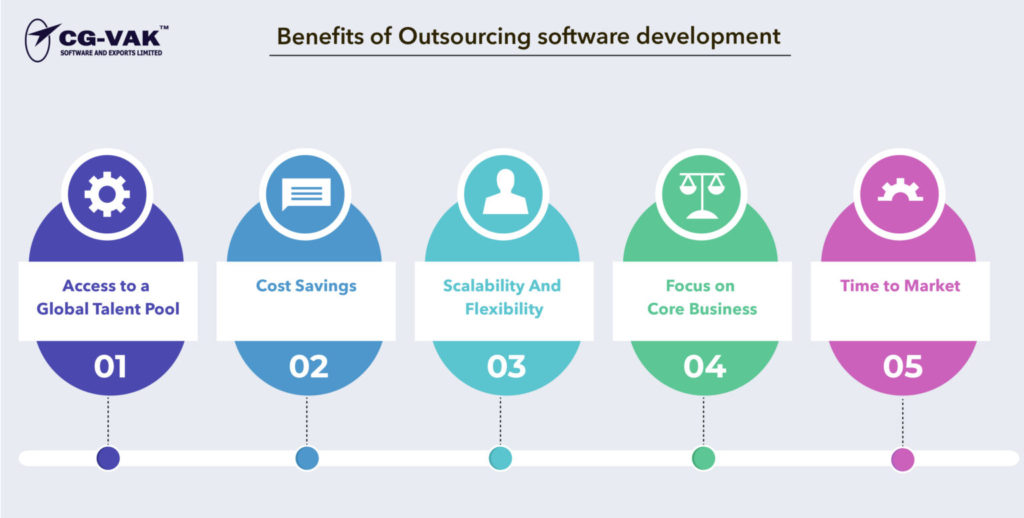
Outsourcing has some apparent advantages. Here is a list of 5 major benefits its offers:

Access to a Global Talent Pool:

When you outsource software development, you gain access to a vast pool of talented developers worldwide. With software outsourcing, geographical barriers no longer hinder finding the most talented developers. By partnering with an outsourcing company, you can access a diverse team of highly skilled developers specializing in various technologies and programming languages. This means that you can easily find the perfect fit for your project, whether it’s a mobile app, a web application, or a complex enterprise system.

Cost Savings:

Let’s accept it! Who doesn’t like to save money? Outsourcing developers can be significantly less expensive than hiring an in-house team of developers. When you partner with an outsourcing company, they can provide you with top-notch services at a fraction of the cost of hiring an entire in-house team. Outsourcing companies typically have lower overheads and fewer operational expenses, which allows them to offer their services at a lower cost. You can save a significant amount of money on salaries, benefits, training, and equipment. This is particularly beneficial for small and medium-sized businesses with limited budgets, as it allows them to access high-quality development services without breaking the bank. With outsourcing software development services, you can save a lot of money, while still getting the quality work that you need. It’s a win-win situation for any business looking to maximize their resources and stay competitive in today’s market.

Scalability And Flexibility:

When outsourcing software development, you can quickly scale up or down depending on your project’s needs. This is particularly useful for startups and small businesses that may not have the resources to hire a team of developers. Outsourcing allows you to access additional resources as and when needed, without the financial burden of hiring full-time employees.

Focus on Core Business:

Outsourcing software development allows you to focus on your core business objectives without getting bogged down in technical details. You can delegate the software development process to a team of experts, freeing up your time to focus on other critical business functions. It allows you to maximize your resources and ensure you are making the most of your time and expertise.

Time to Market:

Outsourcing software development services can significantly reduce your time to market. With a dedicated team of developers working on your project, you can get your product or service to market much faster than if you were to hire an in-house team. This can be particularly beneficial for startups and small businesses that need to move quickly to gain a competitive advantage in their market.

How to overcome the challenges of Outsourcing software development

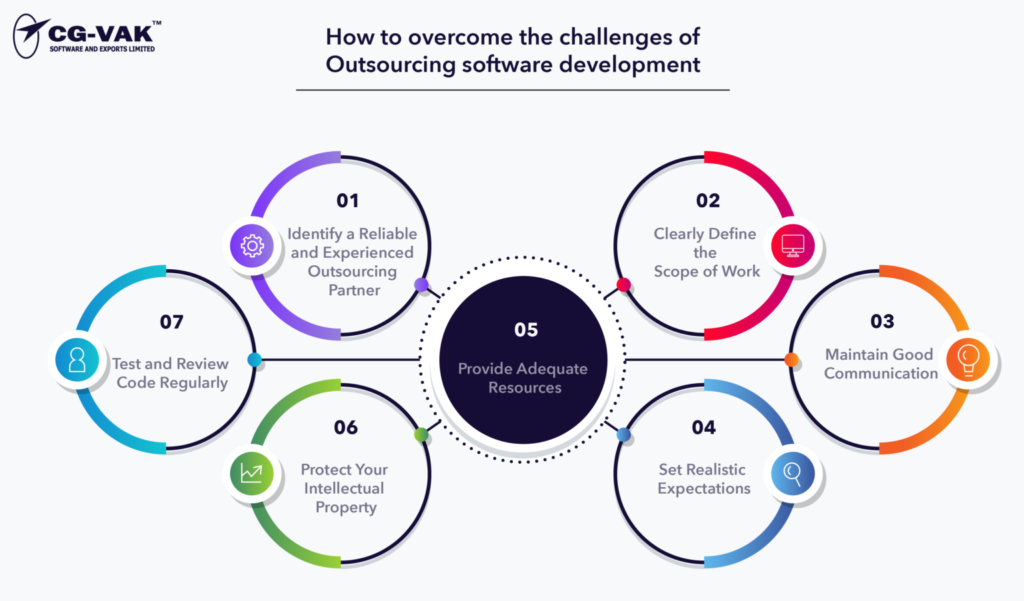
Identify a Reliable and Experienced Outsourcing Partner:

When selecting an outsourcing partner, it is essential to do your due diligence and choose a company with a proven track record of delivering high-quality work. Look for a partner with experience in your industry and the specific technology or programming language you require.

Clearly Define the Scope of Work:

It is essential to have a well-defined scope of work before you begin outsourcing. This will help ensure that both parties are on the same page and that there are no misunderstandings about the project’s requirements or deliverables. Make sure to clearly communicate your expectations and requirements to your outsourcing partner.

Maintain Good Communication:

Effective communication is essential when working with an outsourcing partner. Establish regular communication channels and schedule regular status updates to keep track of progress and ensure that everything is on track. If any issues arise, address them promptly to avoid any misunderstandings or delays.

Set Realistic Expectations:

Setting realistic expectations when outsourcing software development is important. Be realistic about timelines and deliverables, and understand that unforeseen issues can arise during development. Be open to adjusting timelines or deliverables if necessary to ensure the project is completed successfully.

Provide Adequate Resources:

To ensure successful outsourcing, ensure your outsourcing partner has access to the resources they need to complete the project. This may include software licenses, development tools, and hardware. Providing adequate resources will help ensure that the project is completed on time and to the required quality standards.

Protect Your Intellectual Property:

When outsourcing software development, it is important to protect your intellectual property. Make sure that your outsourcing partner signs a non-disclosure agreement (NDA) and takes appropriate security measures to protect your confidential information.

Test and Review Code Regularly:

Regular testing and code reviews are essential to ensure that the project is progressing as planned and that the code is of high quality. Establish regular testing and code review cycles to catch issues early and ensure the code meets your quality standards.

Best Practices and Guidance from CG-VAK Experts

When you outsource software development services to a reliable and experienced partner like CG-VAK, you can rest assured that you are leveraging the expertise of one of the best software development outsourcing companies. CG-VAK follows best practices and guidance in the industry, ensuring that your project is completed efficiently and effectively. With CG-VAK as your outsourcing partner, you can tap into their extensive experience and knowledge of the latest technologies, programming languages, and software development methodologies. You’ll be able to take advantage of their experience in managing outsourcing software development services while still maintaining control over the project and ensuring that your business goals are being met.

Conclusion

Outsourcing software development has become necessary for businesses that want to stay competitive in today’s fast-paced digital world. Companies need to be agile, innovative, and efficient to survive and thrive. Outsourcing software development services can help businesses achieve these goals by providing access to a pool of talented developers with diverse skill sets and expertise. By partnering with software development outsourcing companies, businesses can free up their internal resources to focus on core competencies and strategic initiatives while ensuring that their software development needs are met on time and within budget. With the right outsourcing partner, businesses can navigate the complexities of software development outsourcing and leverage the expertise of experienced professionals to stay ahead of the curve.

Effective Strategies for Leading & Optimizing A Remote Software Development Team

In a rapidly evolving digital landscape, the nature of employment has undergone a significant transformation. Remote software development teams have become the norm, enabling firms to tap into a global talent pool and function efficiently across geographical boundaries. However, leading and optimizing such teams comes with its own unique set of challenges.

As remote work becomes increasingly common, software development services need to have effective strategies for leading and optimizing their work. Hiring remote software developers and managing a remote team brings unique challenges, such as communication barriers and potential productivity issues.

To succeed, leaders must prioritize effective strategies to lead and optimize remote teams. By following these strategies, remote software development teams can work together effectively and efficiently to achieve their goals.

Why Hire Remote Software Development Teams?

In the ever-evolving landscape of software development, hiring remote software developers teams has emerged as a compelling option for firms seeking to construct efficient and innovative software products.

Here are some high-level reasons why hiring remote software development teams is advantageous:

Access To a Global Talent Pool:

When you hire remote software developers, you permit firms to tap into a vast global talent pool, transcending geographical limitations. It enables firms to attract top-notch professionals with diverse skill sets and domain expertise from around the world, ensuring access to the best talent available.

Cost Efficiency:

Remote software development teams often offer a cost-effective solution compared to conventional in-house teams. Firms can save on software development costs and expenses related to equipment, office space, infrastructure, and employee benefits. Additionally, remote teams located in regions with lower labor costs can offer significant cost savings without compromising quality.

Enhanced Flexibility and Scalability:

Remote teams offer unparalleled flexibility and scalability for businesses. Firms can effortlessly scale their development capacity up or down based on project requirements without the need for extensive hiring or downsizing. This agility enables firms to adapt quickly to market demands and effectively manage resource allocation.

Enhanced Productivity:

Remote teams often exhibit higher productivity levels due to minimized distractions and enhanced autonomy. Remote work eliminates the constraints of a traditional office environment, permitting team members to construct a working setup that suits their individual needs and maximizes their efficiency.

Furthermore, remote teams can leverage asynchronous communication and collaboration tools to work across distinct time zones, enabling round-the-clock productivity.

Diverse Perspectives and Innovation:

Remote software development teams bring together professionals from distinct cultural backgrounds and experiences. This diversity fosters a rich exchange of ideas, innovative thinking, and unique problem-solving approaches.

By embracing diverse perspectives, firms can enhance creativity and drive innovation in their software development processes.

Reduced Time To Market:

With a remote team, firms can leverage the concept of distributed development. By breaking down projects into smaller tasks and assigning them to specialized team members, work can progress concurrently, minimizing the overall development time. This accelerated development cycle permits firms to bring their products to market faster, gaining a competitive advantage.

Business Continuity and Risk Mitigation:

Remote software development teams provide a level of resilience and risk mitigation. In the face of unforeseen events such as pandemics, natural disasters, or local disruptions, remote teams can continue working seamlessly, ensuring business continuity.

Also, by diversifying the team’s geographical locations, firms can mitigate risks associated with geopolitical challenges or localized issues. By embracing remote software development teams, firms can harness the advantages of global talent, achieve cost efficiency, drive innovation, and maintain business continuity.

With the right strategies and tools in place, firms can leverage the power of remote teams to accelerate their software development efforts and stay ahead in a rapidly changing market.

Significant Challenges In Approaching Remote Software Development Teams

Time Management Techniques for Remote Software Developers:

One of the hardest aspects of employing a remote software development team is controlling their work hours.

The Fix:

• You may fix this by explicitly outlining each developer’s goals and expectations while offering them tools that include project management software.

• Managers should also build an accomplished communication plan that fosters open conversation among developers and regular check-ins to track progress.

Encourage Remote Software Development Teams To Collaborate And Be Creative:

Working remotely might make collaborating and being innovative with the entire software development team more difficult.

The Fix:

• Managers should foster a collaborative environment by giving enough resources, including virtual whiteboards, video conferencing capabilities, and collaboration applications, to remote engineers.

• Managers should also schedule regular brainstorming sessions so that the entire company can collaborate on novel solutions.

Securing Data in Remote Software Development:

There is always the potential for data security breaches using remote software development due to insufficient access restrictions or poor management.

The Fix:

• When exchanging sensitive information between parties, it is critical to apply encryption and authentication procedures. It is also critical to have a robust monitoring system in place to identify possible data integrity concerns and ensure that all staff understands their responsibilities to preserve personal information.

Communication And Collaboration:

Remote teams face communication and collaboration hurdles due to physical distance and potential language and cultural differences. A lack of real-time interaction can lead to miscommunication and hinder team cohesion.

The Fix:

• Utilize various communication tools like video conferencing, instant messaging, and project management software to facilitate regular and efficient communication among team members.

• Encourage open and transparent communication within the team. Establish clear channels for sharing project updates, feedback, and concerns to maintain a cohesive working environment.

• Conduct regular team meetings to discuss project progress, clarify requirements, and address any challenges. Encourage participation and active engagement from all team members to foster collaboration.

Managing Time Zones:

Remote teams often span across distinct time zones, making it challenging to coordinate schedules and ensure real-time collaboration.

The Fix:

• Establish guidelines for overlapping working hours or specific periods of availability to ensure effective collaboration during common working hours.

• Utilize communication tools and project management platforms that permit team members to communicate and collaborate at their convenience, even if they are not working at the same time. It might lower delays and maximize productivity.

• Provide advance notice for meetings, deadlines, and important discussions, taking into account time zone differences. It permits team members to plan their schedules accordingly and ensures everyone is on the same page.

Performance Tracking and Accountability:

Monitoring and evaluating individual and team performance can be challenging in a remote setting where physical oversight is limited.

The Fix:

• Establish measurable goals and key performance indicators that align with project objectives. It might provide clarity on expectations and permit an objective evaluation.

• Encourage team members to provide frequent progress updates and share their work-in-progress. It helps managers and stakeholders stay informed about the project’s status and detect any potential roadblocks early on.

• Utilize project management software that enables tracking of tasks, milestones, and time spent on each project. It allows for accurate performance evaluations and facilitates transparent reporting.

Building Trust and Team Cohesion:

Building trust and a sense of camaraderie can be challenging when team members are physically separated and have limited face-to-face interactive sessions.

The Fix:

• Encourage team-building activities, such as team challenges, virtual social events, or informal video chats, to promote bonding and build rapport among team members.

• Construct opportunities for casual conversations and informal interactions, such as virtual coffee breaks or dedicated communication channels for non-work-related discussions. It helps replicate the social dynamics of an office environment.

• Promote collaborative work on projects by assigning tasks that require team members to work together, fostering a sense of shared accomplishment and trust.

• By addressing these significant challenges and implementing the suggested solutions, organizations can effectively approach and manage remote software development teams.

• Embracing effective communication, fostering collaboration, building trust, and implementing performance-tracking mechanisms will contribute to the accomplishment of remote software development projects and optimize team productivity.

How Can CGVAK Help You in Software Development?

Consider collaborating with CG-VAK if you have a software project in mind and are seeking a trusted and dependable software development partner.

CG-VAK can provide you with exclusive access to a remote firm team for software development that will remain at your disposal and will assist you in achieving your goals. Do not neglect to outsource and enjoy the advantages of remote software developers by creating a potential partnership with CG-VAK.

Conclusion

Remote software development teams are growing in popularity because they provide countless benefits over conventional in-office development techniques.

With careful preparation and excellent management, a high-performance remote workforce may be effectively managed. We have defined the procedures required to construct and manage an effective remote software development group in this post.

We hope that these recommendations might assist you in creating the ideal atmosphere for your team to thrive and deliver high-quality work products.

Solving Industry Challenges with ChatGPT: How Generative AI Is Transforming Business Operations

Firms are constantly seeking innovative solutions to tackle complex industry challenges. One such solution that has gained significant traction is the use of generative AI development services, specifically ChatGPT, to revolutionize business operations.
From customer service and marketing to data analysis and product development, generative AI is proving to be a game-changer for firms across distinct sectors.
Whether you’re a business owner, a tech enthusiast, or simply curious about the potential of AI and ML in existing applications, this blog will provide you with valuable insights and a deeper understanding of how this technology is shaping the future of business operations.
So, buckle up and get ready to explore the exciting world of generative AI and its impact on solving industry challenges. Let’s dive in and discover the limitless possibilities that ChatGPT offers to firms in their quest for innovation and success.

Opinions on the Future Impact Of AI

The majority of respondents can agree on one thing while being divided on whether the modifications that AI will bring will be helpful or detrimental (41% are optimistic, 39% are frightened, and 19% are undecided).

According to a poll, 67% of respondents think that the emergence of highly sophisticated AI will have a significant and unforeseen impact on society. 60% of respondents think AI will automate chores that will free them up to concentrate on more strategic efforts in the workplace. Furthermore, 54% of respondents think AI will benefit their field of work.

But new prospects also bring new difficulties. Overall, 57% of respondents think AI would lead to significant problems with data privacy, and 53% worry that AI could jeopardize their careers.

Top Business Problems that can be solved with ChatGPT

Crafting Compelling Content:

Crafting high-quality content is a time-consuming task in the corporate world. Companies that use AI tools can help firms generate content that meets specific standards in a limited amount of time.

Whether it’s promotional materials, product descriptions, or articles, generative AI companies can evaluate existing content and create new, high-quality content that is tailored to specific audiences. This approach not only saves money and resources but also enhances the overall quality and consistency of the content.

Enhancing Customer Service:

Generative AI tools like ChatGPT can address challenging problems in customer service.
Chatbots powered by ChatGPT can provide prompt and precise answers to customer inquiries, improving the customer experience. They can also make tailored suggestions based on customer preferences and purchase history.
The official ChatGPT platform can be employed to create chatbots that assist customers in processing orders, answering inquiries, locating products, and resolving complaints.
By leveraging this technology, firms can enhance the customer experience, streamline operations, and drive growth.

Streamlining Legal Operations with Generative AI:

Generative AI tools are valuable in aiding a firm’s legal operations. They can perform legal research, scrutinize case law, and assist in formulating legal documents.
By using generative AI tools like the features of ChatGPT, legal teams can operate more efficiently and proficiently.
For instance, ChatGPT can help scrutinize contracts, detect potential legal issues, ensure compliance with regulations, and minimize the probability of legal disputes.
By leveraging generative AI, corporations can enhance productivity, minimize costs, and elevate the caliber of legal services provided.

Optimizing HR Processes with ChatGPT:

Generative AI tools will offer significant support for corporate HR operations. Through natural language processing and machine learning techniques, tools like ChatGPT can automate repetitive HR tasks and provide accurate and swift answers to staff inquiries.

Virtual HR assistants can be created to help employees manage leaves, administer benefits, introduce new hires, and offer tailored career development recommendations. Additionally, generative AI can be used to streamline talent acquisition, saving time and enhancing the quality of recruitment.
Businesses using artificial intelligence like ChatGPT can optimize HR procedures, lower labor costs, and enhance worker satisfaction and retention.

Unveiling Insights with Data Analytics:

Generative AI technology offers a significant advantage in data analytics. It can uncover hidden patterns and trends that may elude human perception, enabling firms to detect new areas of growth, optimize operations, and enhance customer satisfaction.
Sentiment analysis capabilities permit tools like ChatGPT to analyze social media data and gain insights into customer perceptions.
By leveraging this data, firms can refine marketing strategies, develop a deep understanding of customers, and enhance customer satisfaction.
Generative artificial intelligence in business can also analyze vast amounts of data to detect potential risks, enabling proactive identification and mitigation of issues.

Enhancing Sales Strategies:

Generative AI can be utilized to enhance sales in various ways. One application involves creating personalized product descriptions that cater to individual customer needs and preferences.
By analyzing customer data and behavior, generative AI can generate unique and compelling descriptions. Price optimization is another area where generative AI can be beneficial, as it can analyze customer behavior, market trends, and competitor prices to generate optimal prices.
Generative AI can also assist with customer segmentation and targeted marketing campaigns by detecting patterns and creating tailored campaigns. Additionally, generative AI can develop personalized sales.

Know about Industries that Can Use AI Tools – Chat GPT

The potential of generative AI in various industries is vast, and firms across domains are starting to recognize its impact.
Let’s explore some fascinating examples of how generative AI is transforming different sectors.

AI in Pharma:

Generative AI tools are revolutionizing the pharmaceutical industry by assisting in the identification of potential drug candidates.
Firms like Exscientia have already leveraged AI to develop drugs that are now in clinical trials. The use of generative AI in healthcare extends beyond drug discovery, with applications such as real-time patient communication to enhance medical assistance during emergencies.

AI in Material Science:

In the field of material science, generative AI is enabling groundbreaking discoveries. Researchers have utilized generative AI to detect novel self-assembling nanostructures, opening up possibilities for enhancing batteries, solar cells, automotive parts, and other technologies.
Generative AI also optimizes manufacturing processes, leading to cost reductions and enhanced material quality.

AI in Finance:

Generative AI instruments are tackling complex challenges in the financial sector. By analyzing extensive datasets, AI tools can assess credit risks, detect trends, and predict default probabilities.
Banks have also utilized AI and machine learning technologies to optimize customer service and reduce churn. Investment management is another area where generative AI is proving beneficial for banks like Capital One and JPMorgan Chase.

AI in Education:

Generative AI enhances education by providing personalized learning experiences. Through analysis of student data and behavior, AI creates customized learning materials, boosting engagement, enriching the learning process, and enabling teachers to provide tailored feedback to students.

AI in Entertainment:

In the realm of entertainment, generative AI offers personalized recommendations based on user preferences and behavior. It enhances the user’s experience, ignites curiosity, and encourages the exploration of new content.

AI in Employment:

Generative AI has the potential to revolutionize the job search process. By analyzing job data, AI tools can match candidates with suitable opportunities, optimizing recruitment processes for employers and providing personalized experiences for job seekers. This leads to more successful job matches and fulfilling careers.

Wrapping up!!

ChatGPT app development has sparked a transformative wave across multiple industries. Its ability to generate high-quality content, enhance customer service, streamline legal operations, optimize HR processes, enable data analytics, boost sales, accelerate new product development, creating mobile apps with ChatGPT, improve fraud detection, facilitate coding, and personalize learning experiences has revolutionized the way businesses operate.

By harnessing the power of generative AI and stimulating problem-solving in artificial intelligence, firms can overcome complex challenges, drive innovation, enhance efficiency, and ultimately achieve growth and success.

At CGVAK, we understand the immense potential of ChatGPT and its applications in business. Developing an app using ChatGPT is an effortless task for our firm. Leveraging ChatGPT, we can assist your firm in various ways.

Our team of experts can help you deploy generative AI tools to create compelling content, enhance customer service through AI-powered chatbots, streamline legal operations, optimize HR processes, harness data analytics for actionable insights, boost sales through personalized marketing strategies, facilitate new product development, improve fraud detection mechanisms, and even assist in coding tasks.

With our expertise and the power of ChatGPT, we can enable your business to leverage generative AI effectively, driving innovation and achieving your business objectives.
Embrace the potential of generative AI for your business with CGVAK and ChatGPT, and build an app with ChatGPT to unlock new possibilities in your industry.

Overcoming Infrastructure Automation Challenges for Seamless Implementation

Simplifying tasks and accelerating project delivery are two of the primary issues facing every IT firm. Modern apps are in high demand and are constantly growing to meet the massive amounts of data that devices and end users are generating.

Maintaining the program’s operation properly and error-free necessitates that software development firms continually become involved in new deployment settings. However, manual infrastructure configuration and provisioning are inefficient and sluggish.

Infrastructure automation steps in at this point to help IT firms overcome these difficulties, streamline operations, and enhance productivity and speed by empowering software teams to carry out all essential administration duties with little to no assistance from humans.

In this blog, let’s understand how to overcome the infrastructure challenges for seamless implementation.

Infrastructure Architecture – A Quick Rundown

As functionalities are created that may be employed by additional programs or on command, IT infrastructure automation services will decrease the need for human contact with IT systems.

A repeatable infrastructure that is automated enables developers to swiftly set up environments with a specific aim, such as integrated development, user acceptability testing, or production.

Therefore, infrastructure-level automation has a significant positive impact on modern designs, including microservices and monolithic architecture. This idea may be implemented to automate procedures and quickly control IT components, such as operating networks, network elements, servers, and storage. The major goal of this is to boost a firm’s IT personnel and operational efficiency.

Challenges In Implementing Infrastructure Automation

Every firm today considers automated infrastructure management to be essential, as we are all aware, and demand for it is rising as a result.

While more and more IT firms have adopted new approaches throughout time and have become used to them, this doesn’t imply that they aren’t still faced with obstacles; in fact, they have increased in number.

In general, introducing new technology into any firm to boost efficiency and facilitate operations occasionally does not result in enhanced performance. As a result, processing has slowed down since it takes time to optimize, comprehend, and set up the IT infrastructure for the new technology. In addition to this, firms also encounter the following problems when attempting to embrace the IT infrastructure automation process:

Culture:

Every IT firm needs a new culture, but crucial conditions for development include learning and disruption. It indicates that when a firm’s staff is not in the correct frame of mind, projects might fail.

The key justification for this is that if the team’s collective thinking is not the same, optimizing infrastructure may slow down development and operational procedures. It means that individuals who lack the necessary technical experience and mentality will have a very difficult time adjusting to new and advanced technologies.

Therefore, before implementing automation that comes with the newest technology, firms must first address that problem and aid individuals in developing their abilities.

Outdated Infrastructure:

Automation is crucial when it comes to using productive ideas or following procedures associated with cutting-edge technology like DevOps for infrastructure. In these circumstances, an antiquated infrastructure with limited automation or no self-service is ineffective. The cause of this is that infrastructure management services need ongoing updates and modifications to prevent problems of any kind.

When large IT infrastructures are equally dependable in pre-production and production settings, the firm is robust to failure, and it has rapid access to its processes. Excellent automation methods start to take shape.

Attempting Too Many Things at Once:

Deployment, automatic tests, disposable infrastructure, monitoring and alerting, continuous integration, a secure fortress, and continuous delivery all require time to implement. You risk being overtaken by several obstacles at once if you don’t concentrate on one issue at a time and go at your natural pace.

Being Oblivious to Mistakes:

Although systems are not intended to malfunction or fail, they do. Imagine having a quick technique to assess the system’s health and detect any problematic components.

Observability is the name of that ideal, and even the most fundamental possession is an effort that is going to soon pay dividends.

Communication And Processes:

DevOps and other infrastructure automation tools and technologies are all about interdisciplinary collaboration. It also means that every team member in an organization has to communicate effectively.

Additionally, when the test procedures are manually constructed and the communications are old, providing the resources might take a long time.

Tools And Applications:

Modifying an application is one of the biggest obstacles IT firms encounter when it involves building public or private cloud infrastructure.

Making updates to an application is a tough operation that takes a lot of time and effort since there is a communication gap between business users and software engineers.

In other instances, customers believe that a single app would solve all of their issues, even if they are unaware of the intricacy involved in the back-end integration procedure.

Developers, on the other hand, don’t adhere to a systematic view of the enterprise, and as a result, they cannot comprehend why a quick-fix solution won’t work. However, if the creators and users often employ unauthorized tools, it may worsen the issue and complicate the procedure.

Budgeting:

Budgeting is a problem that firms have while introducing infrastructure automation. Capital and operating costs are constantly linked in every firm.

When businesses implement infrastructure and automation tools, they start to scale up their infrastructure, adding costs to the already existing infrastructure, which may not be completely cost-effective for all firms.

Lack of Resources or Time to Complete it Properly:

Being aware of this widespread error is the greatest defense against it. No firm has the time to look into every possibility and take everything into account. Even if it were possible, the ideal option right now won’t be the best in a year or a month.

Propose an equitable approach that will enhance the system over its current state at a fair cost by investigating all of your possibilities. As many times as necessary, this cycle shall be repeated.

How Does it help Working and Give the Best for Infrastructure Automation?

Firms may bring repeatability and predictability to the procedures used to handle the setup of IT workloads by adopting infrastructure automation.

By releasing priceless IT resources and minimizing complexity, it helps the IT department adhere to its service level agreements. It aids firms in putting more emphasis on commercial value than on menial infrastructure administration.

And in the long run, it can assist firms in boosting uptime and accelerating the regularity of the deployment of new workloads.

Additionally, automation helps the teams of the firm handle complicated environments with the current employees as infrastructure increases in any firm. It implies that continuing tasks including network management, troubleshooting, deploying application workloads, user access management, IMAC or install, move, add, change of workloads, storage administration, data administration, and debugging are all made simpler by infrastructure automation.

Streamline The Process:

Make sure it provides all the necessary security and maximizes productivity if you want to standardize the provisioning procedure throughout your organization.

A firm once employed a ticket-based system for providing infrastructure, which made IT the gatekeeper. At that moment, they regulate the infrastructure but also impede developer productivity by causing bottlenecks.

Therefore, to prevent this, firms must have a standardized workflow that minimizes duplication of effort and incorporates suitable safeguards for operational consistency and security.

Organize And Scale Operations:

To profit from infrastructure automation, firms need to operate at scale and continually optimize their infrastructure, not only have a standardized procedure.

For this, you must provide developers with self-service, automated infrastructure setup with the appropriate controls in place to address policy infractions.

Adopt And Implement a Workflow for Provisioning:

It’s like courting mayhem when infrastructure is manually provisioned and updated more frequently than once per day, utilizing various methods. Teams may occasionally have trouble working together and sharing a perspective on the structure of the company.

Firms must adopt and set up infrastructure and solutions in cloud provisioning methods that are uniform for every cloud, private data center, or service to solve this issue.

Conclusion

Technologies for infrastructure automation are crucial for IT orchestration, effectiveness, and a firm’s digital transformation. They are also crucial in IT firms because they help teams manage tasks quickly and effectively.

But it’s crucial to choose the appropriate collection of technologies when any IT firm wishes to apply infrastructure automation. These technologies can assist in automating repetitive processes and boosting team members’ productivity.

If you’re still unsure about the best infrastructure tools to implement, keep in mind certain key elements. One tool may not be able to satisfy all of your firm’s needs.

To meet your essential needs, you may occasionally need many tools. To properly ship and test using an exploratory test toolkit, tool sets have to be chosen based on the team’s requirements.

Iterate and Innovate: How User Testing Can Elevate Your Product’s Performance

Creating a digital product is like being a master chef whipping up a delicious dish. Like cooking involves a mix of science and art, product development is a complex blend of factors like user behavior, design, timelines, and risks.
Just as top chefs taste their ingredients along the way to ensure a dish turns out beautifully and earns rave reviews from diners, the process of website or application development requires regular checkpoints for evaluation and course correction to deliver a delightful user experience.
One important aspect in the realm of UX design is user testing. UX user testing is a valuable method that allows you to assess your product by putting it in the hands of real users. By incorporating this user testing method into your development process, you can reap numerous benefits.
UX testing helps you identify any usage problems early on, enabling you to make necessary adjustments and improvements. This saves costs in the long run by avoiding major revisions down the line. And, moreover, UX testing provides insights into how users interact with your product. This deeper understanding of user behavior and preferences empowers you to refine the design and tailor it to their needs, ultimately resulting in a more engaging and user-friendly experience.
Incorporating user testing in UX design, you can optimize your product for success. It’s important to note that UX testing starts much earlier in the product development process of a website or app, distinguishing it from A/B testing or analytics. So, just like a master chef tastes their creation to ensure perfection, user testing is a key ingredient in crafting a digital product that delights users and garners rave reviews.

Enhancing User Experience: The Key Advantages of UX Testing

It is widely regarded as one of the best user testing methods in the field of user experience (UX) design. This qualitative approach involves an observer conducting tests with prospective end users, allowing for a comprehensive evaluation of the product’s usability. By observing how users interact with the prototype, usability testing helps identify any glaring usability issues early on, ensuring a smooth user experience.
It falls under the umbrella of user experience testing, which encompasses various methodologies aimed at evaluating and enhancing the overall user experience. It focuses on assessing the usability of a product, analyzing user behavior, and gathering feedback to inform design improvements. User acceptance testing, a critical component of usability testing, specifically aims to determine whether the product meets the users’ expectations and requirements.
In the context of usability testing, user interface testing plays a significant role. It involves assessing the effectiveness and efficiency of the interface design, including aspects like navigation, layout, and visual elements. By incorporating user interface testing into the usability testing process, designers can ensure that the interface is intuitive, visually appealing, and aligned with user expectations.
To achieve the best results, you should adopt a comprehensive approach that combines various user testing methods. Usability testing, user acceptance testing, and user interface testing all contribute to a holistic evaluation of the product’s user experience. By utilizing these methods, designers can gain valuable insights into user behavior, preferences, and pain points, enabling them to make informed design decisions and create a highly usable and engaging product.

The Top User Testing Methods to Consider in UX Design

Here are seven prominent user testing methods:

In-person moderated testing:

In this method, a moderator interacts directly with participants in a controlled environment. The moderator guides users through a series of tasks, observes their interactions, and takes notes. This method allows for real-time feedback, the ability to ask follow-up questions, and deeper insights into user behavior and reactions.

Remote moderated testing:

This method follows a similar approach to in-person moderated testing, but it is conducted remotely using screen sharing and video conferencing tools. Participants can be located anywhere, and the moderator guides them through the tasks while observing their actions and gathering feedback. Remote moderated testing offers the advantage of geographical flexibility and cost-effectiveness compared to in-person sessions.

Unmoderated remote testing:

Unlike moderated testing, unmoderated remote testing doesn’t involve direct interaction between a moderator and participants. Instead, participants independently complete tasks and provide feedback using a remote testing platform or specialized software. This method allows for scalability, as large numbers of participants can be involved, and it can be more cost-effective. However, it lacks the ability to probe and ask follow-up questions in real time.

Guerrilla testing:

Guerrilla testing is an informal and spontaneous method that involves approaching people in public spaces, such as cafes, parks, or shopping centers, and quickly gathering feedback on a product or prototype. It is typically done on-the-spot and doesn’t require advanced planning or recruitment of participants. Guerrilla testing provides quick and low-cost insights, but the sample may not be representative of the target audience.

A/B testing:

A/B testing involves creating two or more variations of a product, interface, or feature and exposing different user groups to each version. User behavior and feedback are then compared to determine which version performs better and meets user needs more effectively. A/B testing is often used to optimize website designs, marketing campaigns, or user interfaces by collecting quantitative data on user preferences and behavior.

Diary studies:

Diary studies involve providing participants with a task or product to use over an extended period, such as a week or a month. Participants document their experiences, thoughts, and observations in a diary or through a digital platform. This method provides insights into long-term usage patterns, challenges faced by users, and overall satisfaction levels. Diary studies offer a more naturalistic view of user experiences over time.

Clickstream analysis:

Clickstream analysis involves analyzing user behavior data collected during their interactions with a product or service. This data includes information such as clicks, scrolls, time spent on different pages, and navigation patterns. By analyzing clickstream data, you can gain insights into how users navigate, interact, and engage with your product. Clickstream analysis provides quantitative data at scale, allowing you to identify areas for improvement and optimization.

User Testing Made Simple: Tips for getting started.

User testing is a crucial part of the design and development process, but it doesn’t have to be complex or overwhelming. Here are some tips to help you get started with user testing in a simple and effective way:

Define clear objectives:

Start by clearly defining your goals and what you want to learn from the user testing. Identify the specific questions you want to answer or the problems you want to solve. This will guide your testing approach and help you focus on gathering relevant insights.

Identify your target audience:

Determine the characteristics and demographics of your target audience. This will help you recruit the right participants for your tests. Consider factors such as age, gender, occupation, and experience level, depending on the nature of your product or service.

Create realistic tasks:

Design tasks that closely simulate real-life scenarios and goals that users would typically perform with your product. Ensure that the tasks are clear, concise, and representative of the main user journey. This will help you observe how users interact with your product and uncover usability issues.

Keep it simple:

Start with a small number of participants, especially if you’re new to user testing. You can begin with as few as five participants, as this often uncovers a significant portion of usability issues. As you gain more experience and resources, you can increase the number of participants.

Use a variety of methods:

Consider using a mix of testing methods depending on your needs and constraints. You can combine in-person moderated sessions, remote testing, and clickstream analysis to gather a well-rounded view of user behavior and feedback.

Conclusion

Great design is something your customers appreciate, anticipate, and are willing to invest in. Launching a product, website, or application with a subpar user experience (UX) can lead to user frustration and potential customer loss. You can avoid this with user testing. That’s why user feedback is inevitable, whether you seek it during the initial stages of development or after the launch. However, delaying user feedback until after the launch can be challenging and costly when it comes to making necessary improvements. Conversely, gathering user feedback early in the development process provides an opportunity to iterate and refine your design more easily and affordably. To get in touch for software testing services, click here.

Accelerating Growth: Harnessing the Power of Scalable Software Solutions

Scalable software solutions are revolutionizing the way firms accelerate their growth. As a result of decreased production, downtime, and dissatisfied customers, outmoded and non-scalable software systems can soon become obsolete.

It’s crucial to have software that’s able to scale up or down as necessary if you want to stay competitive in a dynamic industry. Countless perks come with scalable software solutions, such as higher performance, less downtime, and more flexibility. By harnessing the power of these solutions, firms can adapt to changing demands, handle increased workloads, and future-proof their operations.

In this article, we will explore the concept of scalable software solutions, detect the ideal scenarios for their adoption, and highlight how they ensure long-term viability in an ever-evolving digital landscape.

Exploring the Benefits of Scalable Software Solutions

Minimizes Cost:

Building scalable software solutions can result in significant cost savings for firms in the long run. By handling expansion and enhanced traffic without the need for extensive infrastructure upgrades or additional resources, scalable software eliminates the expenses associated with frequent system upgrades. It not only saves costs but also avoids disruptions to corporate operations.

Utilizing Existing Assets:

Scalable software systems enable firms to optimize the use of their current assets, preventing unnecessary investments in software or hardware. By efficiently managing resources, firms can allocate their budget more effectively and avoid unnecessary expenses.

Agile Implementation of New Features:

Scalable software solutions make it effortless for firms to introduce new features and functionalities as their business grows. This adaptability permits firms to meet evolving customer demands and stay competitive in the market.

With scalable software, new features can be seamlessly added without interfering with current operations or requiring extensive coding modifications. This streamlines the implementation process, saving resources and time.

Enhanced Security and Performance:

Scalable software systems enhance data security and performance as businesses expand. With the increasing risk of security attacks and data breaches, scalable software provides robust security measures and encryption techniques to protect valuable data.

Additionally, scalable software can efficiently manage high-traffic volumes and transactions without compromising speed, ensuring smooth business operations.

Flexibility and Agility:

Scalable software systems offer flexibility and agility, permitting firms to adapt to changing needs.

With scalable software, companies can design their systems to handle more users or boost power requirements. This flexibility ensures that software can accommodate growth and seamlessly adapt to new opportunities without major modifications to the underlying infrastructure. It empowers firms to stay agile and responsive in a dynamic market.

Enhanced Customer Experience:

Scalable software solutions play a crucial role in boosting the customer experience. As businesses expand, customers expect seamless services across all touchpoints.

Scalable software ensures faster, more reliable, and more responsive services, guaranteeing a consistent and high-quality customer experience, regardless of traffic volume or transactions. This fosters customer satisfaction, loyalty, and positive brand perception.

Minimized Downtime:

Scalable software systems minimize downtime and ensure system availability. Downtime can be costly for firms, resulting in lost sales, dissatisfied customers, and reputational damage.

Scalable software effectively manages increased traffic and transactions without compromising performance, ensuring uninterrupted business operations even during peak usage.

By reducing the possibility of downtime, firms can maintain productivity and preserve their reputation.

Illustrating Scalable Software Solutions:

Several prominent examples highlight the significance of investing in scalable software solutions:

Amazon: 

Amazon’s eCommerce platform can handle high volumes of traffic and transactions, particularly during busy shopping seasons. Their scalable infrastructure, including multiple data centers and load balancing, ensures smooth operations.

Spotify: 

Spotify’s scalable architecture, combining microservices and containerization, efficiently handles data and caters to its expanding user base. This scalability permits the quick deployment of new features, such as their expansion into podcasts and audiobooks.

Netflix:

With millions of global users, Netflix relies on a scalable infrastructure to handle heavy traffic. Its distributed architecture and machine learning algorithms personalize content recommendations for individual users, demonstrating the need for scalability.

Uber:

Uber’s scalable infrastructure manages millions of real-time transactions, leveraging machine learning algorithms for demand forecasting and enhanced pricing and route suggestions. It ensures a seamless experience for users, drivers, and riders.

By examining these examples, it becomes evident how scalable software solutions enable firms to effectively manage growth, optimize performance, and deliver exceptional experiences to their users.

The Right Methods to Adopt Software Scalability Solutions

Adopting software scalability solutions is crucial for firms to ensure their systems can handle growth, adapt to changing demands, and remain competitive in the digital landscape.

To successfully adopt scalable software solutions, firms can follow the ideal methods outlined below:

Assess And Plan:

Begin by assessing your current software infrastructure and detecting areas where scalability is needed. Determine your scalability goals and objectives, considering factors such as growing data volumes, increased user load, or expanding functionality. Plan how scalable software solutions can address these needs effectively.

Opt for the Ideal Software Architecture:

Opt for the ideal software architecture system that aligns with your scalability requirements. Consider options such as containerization, microservices, or cloud-native architectures that offer flexibility and scalability. Evaluate the perks and cons of each architecture to make an informed decision.

Outsource Or Hire Skilled Software Developers:

Depending on your resources and expertise, decide whether to outsource software development services or hire software developers in-house. Ensure that the development team has experience building scalable software solutions and can implement the chosen architecture effectively.

Custom Software Development:

Collaborate with your development team, whether in-house or outsourced, to design and develop custom software that meets your scalability needs. The software should be modular, flexible, and capable of handling increased workloads without compromising performance.

Scalability In Software Development:

Incorporate scalability as a core principle during the software development process. Implement coding practices that promote scalability, such as implementing scalable data structures, efficient algorithms, and scalable database designs. Regularly review and optimize code to ensure scalability as the system evolves.

Future-Proof Software Solutions:

Aim for future-proof software solutions by anticipating future growth and market trends. Consider potential scalability challenges and emerging technologies to construct adaptable and future-proof systems. Keep an eye on industry developments and technological advancements to stay ahead of the curve.

Test And Optimize Performance:

Conduct rigorous testing to evaluate the scalability and performance of your software solutions. Use stress testing, load testing, and performance profiling to detect bottlenecks and areas for improvement. Optimize code, database queries, and resource allocation to enhance scalability and efficiency.

Implement Monitoring And Analytics:

Deploy robust monitoring and analytics tools to track the performance and scalability of your software solutions. Monitor key metrics, detect performance patterns, and proactively address scalability issues. Implement data-driven insights to continuously fine-tune and optimize your systems.

Ongoing Maintenance and Updates:

Scalability is an ongoing process. Regularly maintain and update your software solutions to ensure they remain scalable and compatible with evolving technologies. Stay proactive in addressing scalability challenges and continuously invest in research and development to stay ahead.

Collaboration And Business Management:

Foster collaboration between your development team, operations team, and business stakeholders. Maintain open communication channels to align firm objectives with technical requirements. Employ business management software systems to streamline workflows, track progress, and ensure efficient project management.

By following these steps and leveraging scalable software development practices, firms can adopt software scalability solutions effectively. This method helps firms build robust, future-proof software solutions that can adapt to growth, deliver optimal performance, and drive long-term success.

Unleashing Growth Potential: CGVAK’s Scalable Software Solutions for your Business

CGVAK’s scalable software solutions offer firms the opportunity to unleash their growth potential and achieve new levels of success. By harnessing the power of scalable software development, firms can adapt to changing demands, handle increased workloads, and future-proof their operations.

With a focus on custom software development and a team of skilled software developers, CGVAK provides tailored solutions that align with your scalability needs. Whether you choose to outsource software development services or hire in-house talent, CGVAK’s expertise ensures the adoption of the best software architecture system for your business.

By adopting CGVAK’s scalable software solutions, firms can save money in the long run, streamline the implementation of new features, enhance data security and performance, and enjoy the flexibility and agility needed to thrive in a dynamic market. These solutions also contribute to a boosted customer experience, minimized downtime, and future-proof software systems that can adapt to evolving technologies and industry trends.

CGVAK’s commitment to ongoing maintenance, updates, and collaboration ensures that your software solutions remain scalable and optimized for growth. By utilizing business management software systems and promoting open communication channels, CGVAK supports efficient project management and strategic alignment between business objectives and technical requirements.

Unleash your business’s growth potential with CGVAK’s scalable software solutions. With their expertise and focus on building future-proof systems, CGVAK empowers businesses to achieve sustainable growth, stay ahead of the competition, and drive success in the digital era.

Building Trust and Driving Conversions: Web Design Strategies for SaaS Companies

In today’s ever-expanding SaaS industry, having a website that truly shines is absolutely essential for the success of your business. Web design for SaaS companies and web application development are the key ingredients that contribute to a remarkable website tailored specifically for this industry. As SaaS companies continue to dominate various market segments, it becomes increasingly vital to grasp the key ingredients that contribute to a remarkable web design and web application development tailored specifically for this industry. After all, your website serves as the initial impression for potential clients, significantly influencing their decision on whether your product is worth their investment. While it’s widely known that a SaaS website should boast visually appealing aesthetics, user-friendly navigation, and informative content, the real challenge lies in how to achieve these goals effectively.

Investing in top-notch web design is a surefire way to make your SaaS company stand head and shoulders above the competition, engage potential customers, and thrive in the ever-evolving online marketplace.

In this article, our web design agency based in India will not only uncover the essential web design tips for SaaS companies, but also provide you with some stellar design examples from successful players in the industry. By incorporating these best practices, you can craft a website that not only captivates your audience, but also effectively communicates the value of your product, ultimately boosting conversions and propelling your business forward.

Crucial Role of Web Design for SaaS Companies

A well-executed web design for a SaaS company ensures a positive first impression, reinforces the brand image, enhances user experience, drives conversions, and sets the company apart in a competitive market. By focusing on these aspects, SaaS companies can create a website that effectively communicates their value proposition, engages users, and drives business growth.

  • First Impression:

    The first impression is crucial for a SaaS website. A well-designed SaaS web design with an appealing layout, intuitive navigation, and visually pleasing aesthetics creates a positive initial experience. It helps establish credibility, professionalism, and trust in the minds of users. Elements such as clear messaging, easy access to key information, and a visually cohesive design contribute to a positive first impression and increase the likelihood of users staying on the website to explore further. At [Your Company Name], we specialize in creating custom SaaS web designs that captivate users from their very first visit.
  • Brand Image:

    SaaS web design plays a crucial role in shaping and reinforcing a SaaS company’s brand image. Consistency in branding elements such as logos, color schemes, typography, and overall visual style across the website helps create a strong brand identity. A well-designed website aligns with the company’s brand values, positioning, and target audience. It helps users recognize and connect with the brand, fostering trust and familiarity. Through effective use of visuals, imagery, and messaging, the website can convey the unique selling propositions and key differentiators of the SaaS product. At [Your Company Name], we specialize in creating custom SaaS web designs that not only enhance your brand image but also provide a seamless user experience tailored to your specific target audience.
  • User Experience (UX):

    Web design significantly impacts the user experience of a SaaS product. An effectively designed website focuses on user-centric design principles, ensuring that the website is intuitive, easy to navigate, and visually appealing. It considers factors such as information hierarchy, clear and concise content, logical flow, and seamless interactions. A user-friendly interface and intuitive design help users understand the product’s features, benefits, and functionalities more easily. This, in turn, leads to higher user engagement, increased time spent on the website, and improved retention rates.
  • Conversions:

    Web design has a direct impact on conversions, which refer to the actions users take on the website that align with the company’s goals. A well-designed website strategically incorporates elements to drive conversions, such as prominent calls-to-action (CTAs) that guide users towards desired actions like signing up, requesting a demo, or making a purchase. The design also focuses on creating visually appealing and user-friendly forms to facilitate a smooth conversion process. A clear and persuasive design, coupled with a seamless user journey, encourages users to take the desired actions and increases the conversion rate.
  • Differentiation:

    In a crowded SaaS market, a well-designed website helps a company differentiate itself from competitors. It showcases the unique features, benefits, and value propositions of the SaaS product in a visually compelling way. The design emphasizes the company’s strengths and positions it as a superior choice among alternatives. By presenting a visually distinctive and memorable website, the company can leave a lasting impression on users, making them more likely to choose their product over competitors. Effective design elements, such as testimonials, case studies, and comparison charts, can also highlight the company’s competitive advantages and differentiate it from the competition.

Key Web Design Considerations for SaaS Companies

While designing a website for a SaaS company, several key considerations need to be keep in mind. These considerations will help ensure that the website effectively communicates the value of the SaaS product, engages users, and drives conversions. Here are some essential web design considerations for SaaS companies:

  • Clear and Intuitive Navigation:

    A SaaS website should have a clear and intuitive navigation structure that allows users to easily find the information they need. Use a logical menu hierarchy and prominent navigation elements to guide users throughout the website. Consider including a search function for quick access to specific content.
  • Responsive Design:

    With the increasing use of mobile devices, it’s crucial to design a responsive website that adapts to different screen sizes. Ensure that the website is fully optimized for mobile devices, providing a seamless user experience regardless of the device used.
  • Compelling Messaging:

    Craft clear and concise messaging that effectively communicates the value and benefits of the SaaS product. Use compelling headlines, subheadings, and concise copy to grab users’ attention and keep them engaged. Highlight key features, unique selling points, and customer success stories to showcase the value proposition.
  • Visual Appeal:

    Design an aesthetically pleasing website that aligns with the SaaS company’s brand identity. Use high-quality images, visually appealing graphics, and a consistent color scheme to create a professional and visually engaging experience. Pay attention to typography and ensure legibility across different devices.
  • Conversion-focused Elements:

    Incorporate conversion-focused elements to guide users towards desired actions. Use prominent call-to-action buttons and strategically place them throughout the website to encourage sign-ups, free trials, or purchases. Optimize forms for ease of use and minimize friction in the conversion process.
  • Trust Signals:

    Include trust signals such as customer testimonials, case studies, security badges, and certifications to instill trust and credibility. Displaying social proof and demonstrating the success of existing customers can significantly influence the decision-making process.
  • Demo and Trial Opportunities:

    Provide clear and accessible options for users to request demos or sign up for free trials. Showcase the benefits of experiencing the SaaS product firsthand and make it easy for users to take the next step in their journey.
  • Performance and Loading Speed:

    Optimize the website for fast loading speed to ensure a smooth user experience. Compress images, minimize HTTP requests, and leverage caching techniques to reduce page load times. A slow website can lead to high bounce rates and a negative user experience.
  • SEO Optimization:

    Implement on-page SEO techniques to ensure that the website ranks well in search engine results. Conduct keyword research and optimize meta tags, headings, URLs, and content to improve visibility and organic traffic.
  • Analytics and Tracking:

    Integrate analytics tools such as Google Analytics to track website performance, user behavior, and conversion metrics. Analyzing data will provide insights to refine and optimize the website over time.

Driving Conversions: Essential Web Design Tips for SaaS Companies

Driving conversions is a crucial goal for SaaS companies, and web design plays a pivotal role in achieving this objective. Here are essential web design tips for SaaS companies to boost conversions:

  • Clear Calls-to-Action (CTAs):

    Place prominent and compelling CTAs throughout the website to guide users towards desired actions such as signing up for a free trial or purchasing a subscription. Make them visually distinct and use persuasive language to encourage user engagement.
  • Streamlined User Experience (UX):

    Design an intuitive and user-friendly interface that simplifies the user journey. Ensure easy navigation, logical flow, and seamless interactions to minimize friction and maximize conversions.
  • Simplified Forms:

    Optimize forms for simplicity and ease of use. Ask for essential information only, reduce the number of form fields, and provide clear instructions. Utilize inline validation to minimize errors and encourage completion.
  • Trust and Social Proof:

    Incorporate trust signals such as customer testimonials, case studies, and reviews. Displaying social proof instills confidence and trust in potential customers, increasing the likelihood of conversions.
  • Visual Hierarchy:

    Use visual hierarchy to guide users’ attention towards key conversion elements. Employ contrasting colors, sizes, and placement to emphasize CTAs and important information.
  • Mobile Optimization:

    Ensure the website is fully responsive and optimized for mobile devices. A seamless mobile experience improves user engagement and conversions, considering the prevalence of mobile usage.

Web design holds immense significance in driving traffic and fueling sales for your esteemed SaaS company. To accomplish these lofty goals, it is imperative to embrace the essence of best practices and employ highly effective web design strategies. By doing so, you can enhance user experience, boost engagement, and ultimately increase your sales figures. It is vital to prioritize simplicity in your web design, ensuring that your website is user-friendly and easy to navigate. Get your innovative design with best web design company in India.

Closing the Deal! 15 Tips to Minimize Shopping Cart Abandonment and Boost Sales

In the world of e-commerce, the shopping cart plays a pivotal role in the customer journey. It acts as the gateway to transforming potential buyers into satisfied customers. However, despite the efforts invested in attracting visitors to an online store and enticing them with a wide array of products, many firms face the challenge of online shopping cart abandonment. This phenomenon occurs when customers abandon their filled digital shopping carts without completing the purchase, leading to missed opportunities and lost revenue. In this blog, we will explore 15 effective tips to minimize digital shopping cart abandonment and unleash the potential for increased sales and customer satisfaction.

As digital shopping continues to grow in popularity, comprehending the factors that contribute to shopping cart abandonment becomes primary for firms seeking to optimize their conversion rates. By addressing these issues and implementing effective strategies, firms can construct a seamless and engaging shopping experience that entices customers to complete their purchases.

So, join us as we delve into the world of shopping cart optimization, exploring actionable tips and techniques to limit shopping cart abandonment and boost sales. From streamlining the checkout process to enhancing trust and providing personalized incentives, we will explore a wide range of strategies that can help firms close the deal and turn browsing visitors into loyal customers.

Factors Affecting Your Shopping Cart Abandonment

Trust Deficiency: Insufficient trust due to poor website design, a lack of user reviews, inadequate product descriptions, and inaccessible contact information can lead to cart abandonment. Improve trust by enhancing website design, incorporating user reviews, and offering transparent information.

High Shipping Costs:

Unexpectedly high shipping expenses discourage customers. Offer free shipping or flat-rate options to alleviate this issue and inform customers about shipping charges early in the process.

Mandatory Account Creation:

Requiring account creation at checkout creates friction and may result in abandonment. Balance your account benefits with a guest checkout option for a seamless shopping experience.

Lack Of Transparency:

Hidden costs, taxes, or additional fees during checkout contribute to abandonment. Be transparent about all expenses and provide a summary of the order before payment.

Limited Payment Options:

Lack of preferred payment methods leads to cart abandonment. Offer various payment choices, including electronic wallets, credit cards, and prominent alternatives like PayPal.

Inadequate Return Policy:

Unclear or restrictive return policies impact eCommerce cart abandonment rates. Offer a clear, customer-friendly return policy with a reasonable window for returns or exchanges.
By addressing these factors and improving the shopping cart UX, firms can minimize abandonment rates and increase conversions, leading to higher sales and customer satisfaction.

Tips And Strategies to Minimize Shopping Cart Abandonment Rates And Boost Sales

Employ Email Retargeting:

To combat shopping cart abandonment rates, incorporating email retargeting is crucial. By employing cookies embedded in email messages, you can display ads to users as they browse the web, ensuring that they are reminded of their abandoned shopping journey and boost the likelihood of them returning to complete the purchase.

Ensure Transparency with Extra Costs:

Extra costs are a mandatory reason for cart abandonment. To address this issue, eliminate or communicate any additional charges, such as shipping fees or taxes. Offering comprehensive information about these costs early in the shopping process can help limit surprises and encourage customers to proceed with their seamless shopping experience.

Provide Detailed Shipping Information:

Shipping costs play a crucial role in cart abandonment. In a market where customers expect free shipping, it is essential to either offer this option or provide clear and comprehensive shipping cost details. Consider integrating a built-in calculator to estimate shipping expenses based on item weight and quantity, ensuring transparency and meeting customer expectations.

Send Immediate Abandonment Emails:

Act swiftly when a customer abandons their cart by sending a retargeting email immediately. Studies show that the initial hours after abandonment present a prime opportunity to recapture lost customers. By employing email marketing and retargeting technology, you can remind customers of their unfinished shopping journey and motivate them to complete their purchases.

Simplify Account Creation:

Avoid discouraging potential customers by mandating account creation during the checkout process. While customer accounts can offer benefits, they should be balanced with a guest checkout option for a seamless and hassle-free shopping experience. Simplifying the account creation process or employing social login options can help reduce barriers to completing a purchase.

Streamline The Checkout Process:

A lengthy and complex checkout process can deter users from finalizing their purchases. Aim to streamline the process to three to five simple steps, limiting the number of fields per step. Offering a clear progress indication, such as a progress bar, permits users to feel a sense of accomplishment and keeps them engaged throughout their shopping journey.

Optimize Calls to Action:

Effective calls to action are crucial in guiding users through the shopping cart. Employ prominent and straightforward CTAs to inform users about the next steps in the checkout process. Craft concise and descriptive instructions for each stage, ensuring that users know what is expected of them.

Include A “Save For Later” Option:

Permit customers to save items for future purchases by incorporating a “Save For Later” button. This feature caters to customers who may be employing the shopping cart as a wishlist and limits abandonment rates. By offering an easy and convenient way for customers to return their saved items, you can boost the likelihood of future sales.

Engage With Customers During the Process:

Construct a conversational and interactive shopping experience by incorporating brief and friendly messages throughout the checkout process. Engage with users using casual language to make the experience more enjoyable and less tedious. By alleviating some of the form-filling burdens, you can enhance the chances of users completing their purchases.

Avoid Distracting Links:

Avoid including links in the shopping cart that lead customers away from the checkout process. While upselling related products can be tempting, it often results in customers abandoning their carts. Maintain focus on the purchase by minimizing distractions and keeping users engaged in a seamless shopping experience.

Enhance Product Pages:

While addressing cart abandonment is crucial, don’t overlook the significance of engaging product pages. Construct high-quality and interactive product images that capture customers’ attention and convey essential information. Well-designed and informative product pages can positively influence the shopping journey and increase the chances of conversions.

Ensure Continuity Between Product Pages and The Shopping Cart:

Construct a seamless transition from product pages to the shopping cart by displaying product thumbnails in the cart. This visual representation reassures customers that they have selected the right item and fosters a smooth shopping journey. By maintaining continuity and visual consistency, you can enhance the overall user experience and minimize cart abandonment.

Implement One-Click Shopping:

Simplify the buying process for registered customers by implementing a one-click shopping option. Inspired by successful examples, notably Amazon’s one-click purchase, this feature eliminates the need for customers to deliberate over their purchase, reducing friction and encouraging immediate conversions.

Avoid Surprises and Interruptions:

Surprises and interruptions during the checkout process can be detrimental to completing a purchase. Be diligent in reviewing your checkout process and eliminating any confusing pop-ups, unexpected messages, or missing fields. Offer a clear and interruption-free experience to construct trust and ensure a smooth shopping journey.

Optimize Site Speed:

Slow-loading websites contribute to high cart abandonment rates. Prioritize optimizing site speed, especially within the shopping cart section. Fast-loading pages enhance the user experience and improve conversion rates. Investing in site speed optimization can significantly reduce cart abandonment.

Bonus Tips for You

You can employ shopping cart abandonment tools to reduce cart abandonment rates and for improving your shopping cart UX.

Heat Maps: 

Visual representations of user interactions on your website, highlighting areas of high engagement and overlooked elements, revealing user preferences, pain points, and potential checkout bottlenecks.

Session Replays: 

Record and replay website visitors’ browsing sessions to gain insights into their behavior and challenges during checkout, helping identify usability issues and boost the shopping journey.

Polls And Surveys:

Gather direct feedback from visitors by strategically placing pop-up surveys or polls during checkout, permitting you to comprehend cart abandonment reasons and cart abandonment statistics, address concerns, and make pricing or shipping adjustments based on customer feedback.

How CGVAK Can Help Increase Your Sales with A Hassle-Free Shopping Experience

CGVAK, a leading eCommerce development company, offers technical expertise and services aimed at increasing sales by delivering a hassle-free shopping experience. We create customized online stores with advanced features, secure payment gateways, and seamless navigation, tailored to your business needs.
We prioritize the security of your platform and customer data by implementing robust measures such as SSL certificates, encryption techniques, and secure payment gateways.

You can hire eCommerce developers from CGVAK to enhance your eCommerce platform, improve the user experience, and ultimately boost sales by delivering a hassle-free shopping experience to your customers.