10 Key Factors That Make Vue.js the Top Choice for App Development

Vue.js is an open-source and highly flexible framework that empowers developers to build modern and agile applications while utilizing minimal resources.

According to Stack Overflow’s 2022 Developer Survey, VueJS is the third most popular JavaScript framework among developers. This survey also found that VueJS is the fastest-growing JavaScript framework, with a 17% increase in popularity from 2021 to 2022.

In this article, we will delve into the key advantages of the Vue.js framework, which we have come to appreciate through our own experience. We aim to highlight why Vue.js could be an excellent choice for your upcoming app development project.

Why VueJS Stands Out: Key Reasons to Embrace the Framework

For Vue.js development services, our team of highly skilled developers specializes in leveraging the power of Vue.js to deliver exceptional web applications. We offer expertise in harnessing the capabilities of this best-in-class front-end JavaScript framework to bring your project to life.

Simplicity:

Vue.js is known for its simplicity, making it easy to learn and use. Following the Model-View-ViewModel (MVVM) pattern, Vue.js offers an intuitive approach to code development. With a small API footprint, developers can easily remember the functions and methods, enhancing productivity and development speed.

Flexibility:

Vue.js is a highly flexible framework suitable for a wide range of applications, from simple websites to complex web applications. It supports extensive customization, allowing developers to add their own custom features and functionality, providing tailored solutions for specific project requirements.

Performance:

Vue.js prioritizes performance, ensuring fast and efficient page rendering, even on mobile devices. With its virtual DOM implementation, Vue.js optimizes rendering speed and efficiency, resulting in smooth and responsive user experiences.

Documentation:

Vue.js offers comprehensive and well-structured documentation, serving as a valuable resource for developers. The documentation provides clear explanations, concise examples, and detailed guides, facilitating a smooth learning curve. The availability of tutorials and examples further assists developers in quickly grasping Vue.js concepts and best practices.

Community:

Vue.js has a thriving and supportive community. Developers can engage with the community through forums, blogs, and GitHub repositories, accessing a wealth of resources, insights, and collaboration opportunities. This active and helpful community fosters knowledge sharing and encourages continuous improvement.

Lightweight:

Vue.js is renowned for its lightweight nature, making it suitable for resource-constrained environments. With a small footprint, Vue.js consumes fewer system resources, resulting in faster loading times and optimal performance. This characteristic makes it an excellent choice for mobile devices and other scenarios where efficiency is crucial.

Component-based:

Vue.js follows a component-based architecture, allowing developers to build applications using reusable components. This modular approach simplifies code maintenance, enables easier updates, and promotes code sharing between projects. Developers can leverage pre-built components and develop their own, enhancing productivity and scalability.

Extensibility:

Vue.js is highly extensible, enabling developers to enhance its functionality with custom features and libraries. This extensibility empowers developers to create unique and innovative solutions, tailored to specific project requirements, while leveraging the flexibility and versatility of the Vue.js framework.

Vue CLI:

The Vue CLI is a powerful command-line tool that streamlines Vue.js project development. It offers features such as code scaffolding, linting, and unit testing, simplifying project setup and enhancing developer productivity. The Vue CLI accelerates development workflows, enabling efficient project configuration and management.

Ecosystem:

Vue.js benefits from a robust ecosystem of third-party libraries and tools. This ecosystem provides a wide range of options for developers, enabling them to leverage existing solutions and integrations. Developers can tap into the collective innovation of the Vue.js ecosystem, saving development time and effort while building high-quality applications.

For Vue.js development services, our team of expert developers specializes in harnessing the power of Vue.js to deliver top-notch web applications. We offer comprehensive expertise in Vue.js development, ensuring that your project receives the best-in-class front-end JavaScript framework capabilities.

 
Is VueJS Right for Your Project: Key Considerations?

When considering which JavaScript framework to choose for your project, Vue.js is undoubtedly worth evaluating. However, it’s essential to assess whether Vue.js is the right fit for your specific needs. Here are key considerations to help you make an informed decision:

Project Size and Complexity:

Vue.js is suitable for projects of various sizes, from simple websites to large-scale web applications. If your project falls on the smaller end of the spectrum or requires rapid development, Vue.js’s simplicity and flexibility make it an excellent choice. For highly complex projects, Vue.js’s component-based architecture allows for modular development and code reuse, facilitating scalability and maintainability.

Developer Familiarity and Learning Curve:

Assess the expertise of your development team. If your team is already proficient in Vue.js or similar frameworks, adopting Vue.js can be a smooth transition. The framework’s gentle learning curve makes it relatively easy to grasp, enabling developers to become productive quickly. However, if your team has extensive experience in a different framework, consider the potential learning curve and associated time investment before deciding to adopt Vue.js.

Performance Requirements:

If your project demands optimal performance, Vue.js delivers impressive rendering speed and efficiency. Its virtual DOM implementation efficiently updates the UI, minimizing unnecessary re-renders. Vue.js’s lightweight nature and efficient updates make it a favorable choice for applications that prioritize speed and responsiveness, particularly on mobile devices.

Community and Ecosystem Support:

Vue.js benefits from a thriving community and a robust ecosystem of libraries and tools. This strong community support provides access to resources, documentation, and community-driven solutions. Consider the availability of third-party libraries and tools that align with your project requirements. A vibrant community ensures ongoing support, updates, and a collaborative environment to address potential challenges.

Customization and Extensibility:

Vue.js’s extensibility enables developers to customize and extend the framework to suit their project’s unique needs. Assess whether your project requires extensive customization and the ability to integrate custom features. Vue.js’s flexibility allows developers to incorporate their own solutions seamlessly, making it an attractive choice for projects that demand tailored functionality.

Long-term Maintenance and Stability:

Vue.js has gained significant popularity and has a growing user base. However, as with any technology, it’s important to consider long-term maintenance and stability. Evaluate the framework’s roadmap, release cycle, and community support to ensure its continued development and stability align with your project’s longevity.

Compatibility and Integration:

If your project requires compatibility with existing technologies or systems, ensure Vue.js can seamlessly integrate with them. Vue.js offers excellent compatibility with other JavaScript libraries and frameworks, making it easier to adopt or migrate gradually without significant disruptions.

 
Short View on Vue Js Attributes

Animations:

Developers leveraging the Vue.js framework have ample opportunities to utilize animation-enriched libraries, enabling them to create more user-friendly and visually appealing UIs.

Virtual DOM:

Vue.js’s Virtual DOM feature incorporates efficient diffing algorithms, simplicity, and enhanced performance. It is a lightweight solution that allows software developers to build applications without concerns about complex state transitions.

Template:

Offers an HTML-focused template system that seamlessly binds the document object model with Vue.js data. Leveraging the Virtual DOM render function to gather templates enhances the efficiency and ease of UI creation, ultimately improving the UI functionality and enhancing the overall user experience.

Data Binding:

Developers can effortlessly introduce style adjustments and achieve faster development, easier maintenance, swift execution, and code readability enhancement.

Libraries and Tools:

It provides a wide range of libraries and tools that cater to fundamental actions such as mapping and routing, authenticated loading, CLI integration, and feature development. These instrumental resources enhance the development process, streamlining tasks and boosting productivity.

Click the link to read Angular Vs React Vs Vue: Decoding the Differences and Choosing the Right Framework

 
How CGVAK Can Help You?

With Vue.js development services. Our team of experienced Vue.js developers is well-equipped to help you harness the power of this innovative framework. Whether you need a custom Vue.js application, migration to Vue.js, or integration with existing systems, we have the expertise to deliver exceptional results.

We specialize in creating scalable and robust Vue.js solutions tailored to your specific requirements.

Our developers are skilled in component-based development, ensuring code reusability and easy maintenance.

Additionally, our UI/UX designers collaborate closely with the development team to create visually appealing and user-friendly interfaces.

We prioritize optimization and performance, ensuring fast loading times and seamless user experiences.

Vue.js is an excellent option when seeking a flexible and scalable tool for your JavaScript project. Its inherent structure makes it remarkably accessible, even for beginners, allowing for a smooth learning curve. Vue.js’s design philosophy emphasizes error tracking, making it easier to identify and resolve issues during the development process.

While Vue.js is widely recognized for its proficiency in building single-page applications (SPAs) and web interfaces, its versatility extends beyond those domains. It can also be leveraged to create compelling mobile and web applications, showcasing the framework’s adaptability to various project requirements.

If you require guidance or advice regarding Vue.js development, our experienced team is readily available to assist you. We possess comprehensive knowledge and expertise in Vue.js, enabling us to offer valuable insights and recommendations tailored to your specific needs.
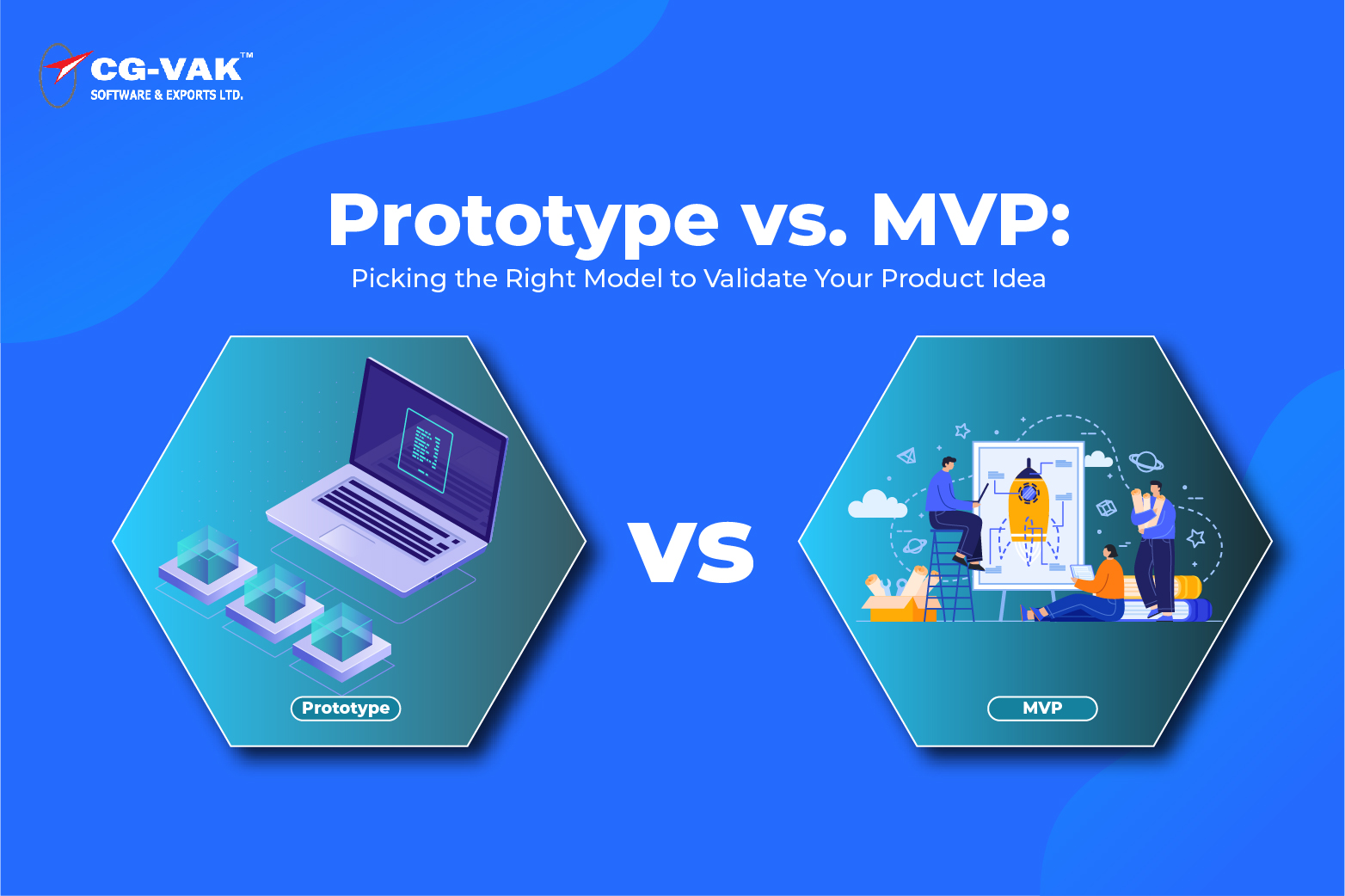
Prototype vs. MVP: Picking the Right Model to Validate Your Product Idea

Software product development or SaaS development is a dynamic and challenging process, with well-known tales of small SaaS companies starting in basements and growing into multi-billion-dollar enterprises. However, among these success stories, there are countless products that failed to reach their potential due to a lack of meticulous planning and execution.

Rather than being discouraged by the high failure rate in new product development, entrepreneurs should consider it a valuable lesson learned from others. Rushing into the process without careful preparation should be avoided based on this insight.

As an entrepreneur in the software industry, you will face numerous challenges when launching your product, with one of the most significant being the need to meet your customers’ needs and desires. The development phase can be expensive, time-consuming, and resource-intensive, underscoring the critical importance of establishing a solid plan beforehand.

To mitigate risks and uncertainties during your product development journey, two key strategies come into play: prototyping and MVP (Minimum Viable Product) development. Both of these have their own advantages.

This article delves into the concept of prototypes and MVPs, examining their advantages and disadvantages, and providing valuable guidance on when to utilize one approach over the other during software product development.

Prototype vs MVP: Which One You Should Pick?

ElementsPrototypeMVP
PurposeValidate the product’s value proposition and market demand before investing significant resources.Test and refine the product’s design, user interface, and usability without incurring substantial development costs.
User FeedbackGathers valuable user feedback, enabling iterative improvements and better alignment with customer needs.Facilitates early validation of design choices and user interactions, leading to a more user-friendly product.
Time to MarketShortens the time to launch a viable product, getting it into the hands of users quickly.Accelerates the design validation process, leading to faster decision-making and development iterations.
Cost-EfficiencyReduces the risk of investing resources in a product that may not meet market needs.Saves development costs by identifying potential design flaws early, avoiding costly changes in later stages
Resource AllocationFocuses on core functionalities, optimizing resource allocation for maximum impact.Allows for better resource planning by exploring different design possibilities before full-scale development.
Real-World TestingProvides real-world testing with actual users, gathering valuable insights for product improvements.Enables stakeholders to visualize the product’s appearance and functionality, aiding in refining the final product.
Market ValidationValidates the product’s market fit and its potential for success.Assists in validating the product’s concept and its feasibility in meeting user needs.

So, you may ask who is the winner?

User Feedback:

MVPs are specifically designed to gather valuable user feedback on actual product functionality and usability. By launching a functional product with essential features, entrepreneurs can obtain real-world insights from users, facilitating iterative improvements and better alignment with customer needs. On the other hand, while prototyping provides a visualization of design concepts, it may not offer the same level of user feedback as MVPs. Prototypes are more focused on early design validation and user interactions, serving as an evaluation tool for user interface and experience.

Winner: MVP

MVPs outshine prototypes in this category by enabling entrepreneurs to obtain direct and meaningful user feedback on functional product features, ultimately leading to more customer-centric improvements and product iterations.

Time to Market:

MVPs hold a clear advantage in time-to-market. By concentrating on developing core functionalities and essential features, MVPs can be swiftly launched, getting the product into the hands of users promptly. On the contrary, while prototyping aids in design validation and faster decision-making, it does not yield a tangible product ready for the market. Its primary purpose lies in visualizing design concepts rather than delivering a market-ready product.

Winner: MVP

MVPs demonstrate their supremacy in terms of time-to-market by providing entrepreneurs with a functional product that can be promptly launched and tested with potential users.

Cost-Efficiency:

Both MVPs and prototyping offer cost-efficiency benefits, making it challenging to declare a clear winner in this category. MVPs reduce the risk of investing resources in features that may not meet market needs, thanks to their focused approach on core functionalities. Simultaneously, prototyping contributes to cost-efficiency by identifying potential design flaws early in the process, avoiding costly changes later on.

Winner: Tie

Both MVP and prototyping share the limelight in cost-efficiency, with each method offering valuable benefits for resource optimization.

Resource Allocation:

MVPs concentrate on developing core functionalities, ensuring that resources are efficiently allocated for maximum impact. In contrast, prototyping allows for better resource planning by exploring various design possibilities and concepts before full-scale development.

Clear Winner: Tie

Both MVPs and prototyping share the spotlight in resource allocation as they focus on core aspects of product development, efficiently utilizing available resources.

Real-World Testing:

MVPs truly shine in this category, offering valuable real-world testing with actual users. This process gathers essential insights for product improvements and validates market fit. While prototyping enables stakeholders to visualize the product’s appearance and functionality, it may not offer the same level of real-world testing and user feedback as MVPs.

Winner: MVP

MVPs take the lead by providing substantial real-world testing, granting entrepreneurs invaluable insights from actual users to enhance their products.

Market Validation:

MVPs are explicitly designed to validate the product’s market fit and potential for success, making them a natural choice for market validation. While prototyping may not directly target market validation, it aids in validating the product’s concept and its feasibility in meeting user needs.

Winner: MVP

MVPs exhibit a slight advantage in this category, excelling in market validation and assessing the product’s viability in the market.

The undisputed champion!

Based on the detailed comparison, MVPs emerge as the clear winner, offering a functional product, valuable user feedback, quicker time-to-market, and explicit market validation. But it also depends on your requirements. While prototyping plays a crucial role in design validation and visualizing concepts, MVPs provide a more comprehensive approach to software product development, securing their position as the ultimate choice for efficient user feedback and market validation.

How CG-VAK Can Help You!

When it comes to launching a new product, choosing the right development model is critical for success. This is where CG-VAK, a leading product development company, comes into play. With their expertise in product development strategies, CGVAK can be your trusted partner throughout the entire development journey.

Product Development Strategies:

CG-VAK employs a range of product development strategies tailored to your unique requirements. Whether it’s building a Minimum Viable Product (MVP) for quick market validation or creating a detailed prototype to visualize design concepts, CGVAK has the expertise to execute your vision with precision.

Choosing the Right Development Model:

Selecting the appropriate development model is pivotal for an efficient and successful product launch. CGVAK’s experienced team will work closely with you to identify the most suitable development approach based on your project’s complexity, goals, and budget.

Proven Expertise:

With years of experience in the industry, CGVAK has a proven track record of delivering successful product launches. Their team of skilled developers and designers collaborates closely with clients, ensuring that the final product aligns with their vision and meets market demands.

End-to-End Solutions:

We offer comprehensive end-to-end solutions, from initial concept ideation to product deployment and post-launch support. Our full-stack capabilities encompass every aspect of product development, ensuring a seamless and efficient development process.

Customer-Centric Approach:

At CG-VAK, the focus is on customer satisfaction. We prioritize effective communication and collaboration, involving clients at every stage of development. This customer-centric approach allows for valuable feedback and ensures that the final product exceeds expectations. Whether you’re launching a new product or enhancing an existing one, our product development expertise, tailored strategies, and customer-focused approach make them the ideal partner to bring your software product vision to life.

Best Web Strategy: CMS Vs. Custom Websites for Success

When you’re starting a business, you might wonder whether it’s better to go with a CMS website development (like WordPress) or take on the challenge of building custom websites from scratch. This choice really matters because it affects how your business looks online. It’s like picking the right outfit for an important event!

The decision depends on things like how much money you can spend, what your business really needs, and what you want for the future. Whether you’re a tech expert or not, it’s totally okay to think about whether to use a pre-made CMS or dive into building your own website.

Both options have good and not-so-good parts, and what’s right for you depends on what your business is all about. So, don’t rush it. Take your time to decide, and don’t just assume one way is always the best. It’s like choosing between different flavors of ice cream – you want to pick the one that’s just right for you!

A Comprehensive Comparison of CMS and Custom Development

Opting for either custom website development or a standard content management system (CMS) hinge upon tailoring the choice to suit the unique requirements and objectives of your business. At WAM (Web Access Management), we lean towards custom development due to its flexibility and scalability, but there are cases where a standard CMS fits better.

Cost:

Custom CMS website development can have a higher upfront cost, but its tailored nature often results in a significant long-term return on investment. Custom projects precisely align with your business’s needs, potentially increasing profitability over time. Conversely, standard content management systems (CMS) might save money initially but lack the flexibility required for your business’s growth.

Development Time:

Opting for a standard CMS usually speeds up development due to pre-built plugins and templates. Custom CMS website development requires more upfront work to ensure design and structure fit your industry and audience, which might extend the project timeline.

ROI and Conversion:

Custom CMS website development often offers a higher ROI and better conversion rates. Tailored websites precisely cater to your business objectives and target audience, boosting user engagement and conversions.

SEO:

Custom websites excel in search engine optimization (SEO) as they’re built with search engines in mind. Standard CMS platforms might have limitations that impact your site’s ranking potential.

Scalability:

Custom CMS website development is usually more scalable, seamlessly accommodating your business’s growth. Standard CMS platforms might struggle with significant expansions, necessitating costly adjustments.

Security:

Custom websites provide enhanced security against cyber threats, with custom code being less susceptible to hacking attempts. However, robust security measures are essential. With a custom CMS website development, security is managed by developers or custom plugins, which might not always offer comprehensive protection.

Performance:

Custom CMS website development optimizes performance efficiently, using only necessary code. Standard CMS platforms might generate excess code, leading to slower loading times.

Third-party Integration:

Leading CMS platforms offer convenient third-party integration using pre-built tools and APIs. Custom CMS website development requires tailored integration systems for smooth communication with external services, demanding skilled developers familiar with both CMS capabilities and custom integration processes.

Factors to Consider While Making a Decision

When you’re trying to figure out whether to go for custom website development or opt for a CMS development service provided by a reliable website development company, there are some important things to consider.

Project Complexity and Tailored Solutions:

Custom CMS development services are a great fit for complex projects that need unique functions. The benefits of custom website development become clear when you want solutions designed specifically for your project’s needs. On the flip side, a CMS development service can speed up the process if your project can make use of existing platform features.

Scalability and Growth Potential:

One of the major perks of a custom website development service is its ability to grow with your project. Custom solutions are built to handle changes and growth. While CMS development can also scale up, it might struggle with projects that need rapid expansion.

Budget Management and Cost-effectiveness:

Your budget is a big factor. Custom website development might cost more initially due to its tailored nature. Yet, the advantages of custom solutions can make the investment worth it in the long run. Going for a custom CMS development service might require a bit more upfront money, but it can pay off with unique features and better alignment with your business goals. On the other hand, CMS development is often more budget-friendly upfront because it uses pre-built parts, which is handy if your budget is tight.

Flexibility and Unique User Experiences:

Custom website development services offer unmatched flexibility, allowing you to create unique experiences tailored to your project. The benefits of custom website development really shine when you need complete control over design and how things work. While CMS development can be flexible, it might have some limitations compared to custom solutions.

Maintenance and Ongoing Support:

CMS development services usually come with tools for maintenance and regular updates. On the other hand, custom website development needs ongoing maintenance to keep everything secure and up to date. It’s essential to work with a dependable website development company for both approaches, ensuring you have the expertise you need for continuous support and improvements.

In the end, the right choice depends on your project’s complexity, budget, scalability needs, timeline, and the expertise of the website development company you choose. Custom website development offers tailored solutions and scalability, while a CMS development service is more budget-friendly and quicker to set up. Taking these factors into account will help you make a well-informed decision that lines up with your project’s goals and paves the way for its success.

How to Choose Standard CMS vs Custom Website

When deliberating between a standard Content Management System (CMS) and a custom website, factors like complexity, scalability, budget, and timeline come into play. Standard CMS options such as WordPress or Joomla provide quick setup through templates and plugins, making them suitable for those without technical expertise or tight budgets. Meanwhile, custom websites offer tailored solutions, granting control over design and features, and are apt for intricate projects and future expansion, albeit requiring more time and budget.

It’s essential to consider the expertise of a website development company and whether to hire web developers. A skilled team can guide you through the CMS vs custom website decision, aligning it with your project’s unique needs. A CMS is great for swift deployment, but if your business seeks distinct branding, advanced features, or seamless growth, custom development is more suitable. By weighing these aspects, you can determine the right fit for your project and achieve your goals effectively.

How CGVAK can help in Choosing CMS or Custom Websites?

CGVAK, as a seasoned website development company, can provide valuable guidance in choosing between CMS and custom websites. With expertise in both approaches, CGVAK can assess your project’s unique requirements, budget constraints, and growth objectives.

CGVAK’s professionals can help you evaluate the benefits of a CMS development, like rapid setup and easy content management, particularly if you lack technical skills or have a tight budget. They’ll also outline the strengths of custom websites, including tailored design, advanced functionalities, and scalability.

By understanding your business needs, CGVAK can suggest the optimal path – whether it’s harnessing the efficiency of a CMS or harnessing the versatility of custom development. Their experienced team can ensure that your decision aligns with your long-term goals, resulting in a website that not only meets your current needs but also evolves as your business grows.

Conclusion

As an experienced website development company, CGVAK stands ready to provide invaluable assistance when it comes to making the decision between opting for a Content Management System (CMS) or going for a custom website. With a comprehensive understanding of both approaches, CGVAK is well-equipped to thoroughly analyze the specific requirements of your project, your budget limitations, and your aspirations for growth.

The team of professionals at CGVAK can play a pivotal role in guiding your decision-making process. They can offer a comprehensive evaluation of the advantages associated with a CMS. This includes highlighting its rapid setup and user-friendly content management, which can be particularly advantageous if you lack technical expertise or have financial constraints. Simultaneously, they can elaborate on the robust points of custom websites, showcasing how they facilitate personalized design, advanced functionalities, and the ability to scale as your business expands.

By gaining a deep understanding of the unique needs of your business, CGVAK can provide you with expert advice on the most suitable path to follow. They can assist in determining whether the streamlined efficiency of a CMS aligns better with your goals or whether the adaptability and flexibility of custom development are more in line with your vision. With their wealth of experience, CGVAK’s team can ensure that your chosen approach harmonizes with your long-term aspirations. Ultimately, their expertise culminates in crafting a website that caters not only to your present requirements but also evolves seamlessly as your business thrives and grows.

FinTech App Development: Budgeting, Cost & Must-Have Features

The FinTech industry has orchestrated a transformative revolution in the financial services and banking sector, propelling it into a multi-billion-dollar realm. This groundbreaking technology has empowered financial establishments to introduce novel and cutting-edge services to their clientele, leading to an exceptional surge in the sector’s expansion.

With the ongoing progression of technology and a reduction in the cost to build a FinTech application, the potential for further revolutionary changes within the FinTech industry and banking sector is remarkably vast. Predictions indicate that the FinTech marketspace is poised to attain a value of $699.50 billion by 2030, alongside an anticipated escalation in the count of digital banking users from 197 million in 2021 to 217 million by 2025. As the demand for innovative financial solutions rises, the role of fintech app development companies becomes increasingly pivotal in shaping the landscape of financial services.

FinTech App Development Cost & Features

Exploring the realm of FinTech app development, one encounters a trifecta of pivotal elements: the cost of developing an app in India, the balance between FinTech app development cost and features, and the evolution of FinTech app development itself.

When it comes to the cost of developing an app in India, it’s worth noting that the country has emerged as a prime destination for cost-effective app development. Reports indicate that India offers competitive rates for app development services, making it an attractive choice for FinTech companies aiming to optimize their budgets.

The synergy between FinTech app development cost and features is a delicate dance. The expenditure varies based on multifaceted factors such as the complexity of features, platform compatibility, security measures, and integration with financial systems. Recent studies underscore the importance of striking a balance between these aspects to create a compelling FinTech app without overshooting the budget.

In the ever-evolving domain of FinTech app development, innovation is the heartbeat. The landscape continues to be shaped by the fusion of cutting-edge technologies, dynamic user expectations, and evolving market trends. As we look ahead, forecasts point to a steady growth trajectory for FinTech app development. With the integration of emerging technologies like blockchain, AI, and biometrics, these apps are poised to offer heightened security, seamless user experiences, and enhanced financial insights.

Types of FinTech Applications

In the dynamic realm of financial technology, various types of FinTech applications cater to diverse financial needs. As highlighted earlier, the costs associated with developing these applications can vary significantly based on their nature. Let’s delve deeper into each category and their estimated development costs:

  1. Banking Apps:

    The evolution of banking apps has revolutionized financial management, offering users the convenience of digital banking services. From account creation to loan applications, these apps provide comprehensive solutions that eliminate the need for physical visits to branches. A noteworthy example involves the successful development of an AI-based mobile app for a global bank. The cost range for building FinTech banking apps typically falls between $30,000 and $300,000, taking into account the varying complexities.
  2. Lending Apps:

    The rapid expansion of the peer-to-peer (P2P) lending industry underscores the demand for technology-driven solutions. These apps facilitate loan applications and approval processes through digital channels, enhancing efficiency and reducing procedural complexities. Incorporating smart systems that leverage artificial intelligence and machine learning ensures accurate verification and authentication of user information, leading to error-free outcomes. Building FinTech lending apps generally requires an investment ranging from $50,000 to $150,000.
  3. Personal Finance Apps:

    Personal finance apps empower users to take control of their financial well-being, providing tools to manage earnings, expenses, and budgets seamlessly. A well-designed personal finance app can be developed by a skilled fintech app development company, with costs spanning between $50,000 and $300,000.
  4. Insurance Apps:

    Insurtech ventures are embracing digitalization to offer customers more accessible and affordable insurance coverage. The estimated cost of building insurance apps typically ranges from $45,000 to $200,000, depending on the complexity of features.
  5. Investment Apps:

    Investment apps provide users with diverse investment opportunities, from traditional mutual funds to cryptocurrency trading platforms. These apps enable users to invest and manage their funds efficiently. The development cost for investment apps varies between $60,000 and $120,000, influenced by the features and functionalities integrated.

These cost estimates are intended to provide a general overview, as the specific requirements and intricacies of each app can impact the final cost. FinTech applications that meet the evolving demands of the financial sector. With the FinTech landscape continually evolving, investing in the development of these applications is a strategic move that aligns with the transformative potential of technology in finance.

Key Features to Consider Including in Your Fintech App

Here are some of the features to be included:

  • User Authentication and Security:

Implement robust user authentication methods such as biometric recognition (fingerprint, face ID) and two-factor authentication (2FA) to ensure secure access to the app. Security measures like data encryption and SSL certificates are essential to protect users’ sensitive financial information.

  • Account Management:

Enable users to create and manage accounts seamlessly. Offer features like account balance tracking, transaction history, and account statement generation.

  • Payments and Transfers:

Facilitate various payment options, including peer-to-peer (P2P) transfers, bill payments, and mobile wallet integrations. Incorporate real-time payment processing and support for different payment methods, such as credit/debit cards and digital wallets.

  • Personal Finance Management:

Provide tools for users to track their income, expenses, and budget. Offer categorization of transactions, spending insights, and trend analysis. An interactive dashboard can help users visualize their financial health.

  • Investment and Trading:

If applicable, integrate investment features like stock trading, mutual fund investments, and cryptocurrency trading. Provide real-time market data, portfolio tracking, and investment recommendations based on user preferences.

  • Loan Applications and Calculators

Include features for users to apply for loans, calculate loan eligibility, and estimate repayment terms. Integration with credit scoring systems can offer users insights into their creditworthiness.

  • Notifications and Alerts:

Keep users informed about account activities, upcoming bills, payment reminders, and investment opportunities through push notifications, emails, or SMS alerts.

  • Customer Support and Chatbots

Incorporate a customer support feature for users to reach out with queries or issues. AI-powered chatbots can handle routine inquiries, providing instant responses and enhancing customer service.

  • Analytics and Insights

Offer personalized financial insights based on user behavior and spending patterns. Provide reports, charts, and graphs that help users understand their financial habits and make informed decisions.

  • Security Features

Implement advanced security measures such as device authorization, session timeouts, and fraud detection algorithms to safeguard user data and transactions.

  • Integration with Third-party Services

Allow users to connect their accounts with external financial services like tax calculation tools, investment advisors, and financial planning platforms.

  • Regulatory Compliance

Ensure that the app adheres to financial regulations and compliance standards, such as KYC (Know Your Customer) and AML (Anti-Money Laundering) procedures.

  • Language and Currency Support

If your app targets a global audience, provide multilingual support and the option to switch between different currencies.

  • User Onboarding and Tutorials

Create a user-friendly onboarding process and offer tutorials to guide users through the app’s features, ensuring a smooth user experience.

  • Offline Mode and Data Sync

Enable limited functionality even in offline mode and ensure data synchronization when the user regains connectivity.

Top Tech Tools Transforming Fintech Applications

The FinTech landscape is evolving through the integration of innovative tech tools. Artificial Intelligence (AI) and Machine Learning (ML) drive personalized experiences and robust fraud prevention. Blockchain technology ensures secure, transparent transactions and automates contracts. Open banking APIs foster collaboration, offering holistic financial views and tailored services. Robotic Process Automation (RPA) enhances efficiency by automating tasks.

Factors for a Successful Project

Successful FinTech app development hinges on key factors. Prioritize user experience with an intuitive interface and user feedback integration. Adhere to regulatory standards like KYC and data privacy laws. Build scalable architecture for future growth and easy tech integration. Ensure robust data security with encryption and multi-factor authentication. Partner with experts in fintech app development. Thorough testing guarantees reliability, and consistent updates keep the app competitive and aligned with user needs.

How CGVAK Can Help You

CGVAK stands out as one of the best FinTech app developers, offering custom FinTech app development solutions. With their expertise in crafting tailored financial applications, CGVAK ensures your app aligns perfectly with your business vision. Their skilled team specializes in creating intuitive user interfaces, implementing advanced functionalities, and adhering to the highest security standards. From ideation to deployment, CGVAK’s agile methodology ensures transparent collaboration and adaptable solutions. With a commitment to client satisfaction and a focus on cost-efficiency, CGVAK is the ideal partner to transform your FinTech app idea into a unique and successful reality.

Exploring 15 Backend Frameworks for Effective Web App Development

Enter the dynamic realm of web application development! As this realm continues to expand, popular backend frameworks emerge as your essential allies, ready to help you craft exceptional digital experiences. These open-source backend web frameworks stand by your side, equipping you with the necessary tools and techniques for tasks such as database management, server setup, and route handling. They form the core of seamless web development.

But there’s more to these frameworks than lines of code. They’re all about enhancing user experiences, creating pathways for API communication, seamlessly integrating with databases, and optimizing server-side performance. They seamlessly guide rapid prototyping and smooth scaling, ensuring that your application is not only user-friendly but also highly efficient.

However, keep in mind that the tech landscape is in constant flux. What’s trending today might be outdated tomorrow. This is where staying up-to-date becomes crucial, and here’s where backend development services come into play. These services become your compass, helping you navigate the realm of popular backend frameworks. They ensure you’re equipped with the right tools, resulting in web applications that truly stand out.

Are you ready to dive into the world of popular backend frameworks, making the most of open-source flexibility? Eager to leverage backend development services for expert guidance? Join us on this journey as we transform your web development aspirations into reality!

What is Backend Framework?

A backend framework is a pre-built foundation simplifying web application development. It aids in the creation of full-stack web apps by providing tools for managing databases, routing data, and handling server requests. It’s the best software to create web applications efficiently, offering standardized solutions for common challenges and bolstering security measures. These frameworks ensure seamless web application development, empowering developers to focus on the user-facing features. If you’re looking to dive into this realm but lack the expertise, you might consider hiring a backend developer. With their skill set, they’ll navigate the backend framework intricacies, ensuring your web app thrives. So, whether you’re a pro or a newbie, a solid backend framework is your go-to for successful web application development.

Key Benefits of Backend Frameworks

Backend frameworks offer a plethora of key benefits that significantly enhance the process of web application development. Firstly, these frameworks provide a structured foundation that accelerates development by offering pre-built components, libraries, and tools. This standardized approach not only speeds up coding but also ensures consistency, reducing the likelihood of errors.

Security is another paramount advantage. Backend frameworks often incorporate built-in security features and best practices, safeguarding against common vulnerabilities like SQL injection and cross-site scripting. This proactive approach ensures that sensitive data remains protected, boosting overall application security.

Scalability is a crucial consideration for modern applications, and backend frameworks address this adeptly. They offer scalability features and optimization techniques that allow applications to efficiently handle increased user traffic and growing data volumes without compromising performance.

Moreover, backend frameworks contribute to team productivity by providing a shared set of conventions and practices, fostering collaboration and making it easier for developers to work on different parts of a project. Lastly, backend frameworks play a vital role in future-proofing applications. By adhering to industry standards and best practices, these frameworks make it easier to adapt to technological advancements and changes in the development landscape.

In essence, backend frameworks streamline development, fortify security, enable scalability, promote teamwork, and ensure long-term viability – collectively forming an indispensable toolkit for modern web application development.

Here is a list of 15 frameworks and their salient features

Laravel:

Laravel, an open-source PHP web framework, empowers developers to craft elegant web applications with minimal coding due to its graceful syntax. With its foundation in MVC architecture, it offers both simplicity and swift development, making it an ideal choice for web application development and the creation of full-stack web apps. Noteworthy attributes include efficient traffic handling, robust security, adaptability, seamless third-party integration, and straightforward unit testing, positioning it as one of the best software to create web applications.

Node.js:

Node.js, a favored technology, serves both frontend and backend needs through JavaScript. Its asynchronous, event-driven design suits scalable network apps, making it highly suitable for web application development and mobile app building. The framework’s strengths lie in scalability, mobile and developer-friendly usability, rapid reliability, real-time multi-user web applications, and economical development costs.

ASP.NET Core:

Developed by Microsoft, ASP.NET Core streamlines the creation of maintainable, scalable web applications using languages like F#, C#, and Visual Basic. Its cross-platform capability and optimized scalability are prominent, making it a powerful tool for web application development. Additional features encompass effortless cloud deployment, heightened security with inbuilt authorization and authentication, along with a solid caching system.

Fiber:

Fiber, tailored for Golang developers, boasts scalability and easy integration with third-party libraries. Rooted in Fasthttp, it delivers speed with minimal memory usage, making it a valuable asset for both web application development and mobile application development. Its core features encompass simple routing, REST API generation, customized prefix static files handling, and efficient performance with low memory overhead.

Phoenix:

Phoenix, an Elixir-based open-source web framework, expedites web application development, including the creation of full-stack web apps. Leveraging Elixir’s speed and Erlang’s reliability, Phoenix offers real-time capabilities with minimal memory footprint. Its noteworthy attributes include an inbuilt testing framework, concurrency focus, and support for real-time elements.

Ruby on Rails:

Also known as Rails, Ruby on Rails is an MVC framework for efficient web application development using Ruby. It offers flexibility, adherence to software patterns, and extensive tool and library support, making it one of the best software to create web applications. Key traits comprise easy utilization of HTML, CSS, JS, and a modular structure integrated with inbuilt testing functionalities.

Django:

Django, a high-level Python framework, operates on MVC architecture, focusing on simplicity and efficient development with concise coding. Key features include adherence to the DRY principle, HTML template rendering, and seamless database integration, making it a top choice for web application development and mobile app development.

Spring Boot:

Spring Boot, rooted in Java, simplifies creating stand-alone enterprise applications with clean, modular code, catering to web application development and mobile application development. Its scalability and robust authentication and authorization are highlights. The framework’s modular architecture enhances maintainability, and it supports various coding languages.

Flask:

Flask, a lightweight Python framework, speeds up web app creation by simplifying HTTP requests and responses. It’s scalable, customizable, and aligns with microservices architecture, suitable for both web application development and mobile app building. Key attributes include URL routing, built-in web server debugging, and seamless third-party extensions integration.

Express.js:

Express.js, a lightweight Node.js framework, excels in creating server-side apps and RESTful APIs. Its high performance, seamless third-party library integration, and robust error handling and debugging mechanisms stand out, making it a crucial component of both web application development and mobile app building.

Meteor.js:

Meteor.js eases cross-platform app development using JavaScript or TypeScript. It supports web, iOS, Android, and desktop apps, offering rapid prototyping, automatic CSS, and a reactive template system, catering to both web application development and mobile application development. Scalability, flexible coding, and consistent cross-platform usage define its features.

AppMaster:

AppMaster, a no-code platform, efficiently develops production-grade apps, automations, and IoT applications, encompassing both web application development and mobile application development. It generates AI-driven backends and offers visual editing tools, making it user-friendly for beginners. Key features encompass automation, AI-powered backend creation, and comprehensive implementation support.

Koa:

Koa, a lightweight framework, capitalizes on modern JavaScript features for expressive code. It handles HTTP requests and responses, supports asynchronous code, and seamlessly integrates with third-party tools, making it valuable for both web application development and mobile app building.

Next.js:

Next.js, an open-source React backend framework, excels in server-side rendering and CSS support. It optimizes loading speeds and user experiences through features like hot reloading and advanced pre-rendering, catering to both web application development and mobile app building.

CakePHP:

CakePHP simplifies custom web development with its MVC architecture, offering scalability and robustness. It supports ORM, security tools, and a potent routing system for efficient development, making it versatile for both web application development and mobile app building.

Conclusion

When considering the optimal backend frameworks, crucial factors demand your attention. Among these are the learning curve, accessible documentation, community support, library flexibility, security measures, update frequency, and scalability potential.

Exploring the previously outlined compilation of backend frameworks equips you with insights into their distinct traits and standout attributes. This insight guides your selection process for your project, indicating the framework that aligns best. For expert guidance tailored to your organization’s needs, you can consult a proficient team of software specialists who analyze your requirements and recommend the apt technology.

Our adept backend development professionals excel in constructing feature-rich, scalable, and user-friendly backend solutions. So, you can hire a backend developers now from CG-VAK.

Elevate your digital products by enlisting a backend developer proficient in leading frameworks and languages. This strategic move empowers your projects with enhanced strength and effectiveness.

AI-Driven Apps-Budgeting for Your AI-Powered Application

AI technology has emerged as the brightest star on the horizon. It’s like a superpower for businesses, offering valuable insights and predictive analysis. Whether it’s in healthcare or customer support, AI is rapidly becoming a must-have tool for many companies. But here’s the catch—it can also be quite expensive.

The cost of developing an AI application can vary significantly based on various factors. If you’re eager to find ways to save on your AI app project, be sure to check out our article on the ultimate AI builder for 2023. With our guidance, you can make the most of your budget and craft an impressive and powerful AI application.

In this post, we’ll dive into the different costs associated with developing an AI app and explore the various factors that can impact the final price tag. We’ll also share some valuable tips on how to economize while creating your own application. With our assistance, you can maximize the value of your budget and create a remarkable AI application.

Introducing Artificial Intelligence (AI) Apps

We’re living in an era where Artificial Intelligence (AI) has seamlessly integrated into our daily lives. Whether it’s the digital assistant on your smartphone or voice-activated gadgets in your home, AI is omnipresent. The rising demand for AI-driven applications has given birth to a fascinating world of AI apps designed for diverse purposes. But what exactly can these apps do?

AI apps are like the superheroes of the digital realm. They enhance user experiences, automate tasks, and unveil insights about data and customer behaviors. Their application spans across various industries and sectors, from healthcare and retail to manufacturing. These apps possess the uncanny ability to handle vast volumes of data and employ complex algorithms to uncover patterns and relationships that would otherwise remain hidden. For instance, an AI app can sift through customer data to predict future purchases or pinpoint areas where customer service needs improvement.

Developing an AI app entails a blend of programming languages, algorithms, libraries, and APIs. The cost of developing such an app hinge largely on the project’s scope and complexity. Additional factors like data storage requirements, platform specifications, and testing demands also contribute to determining the overall development cost.

Why do Businesses Invest in AI App Development?

Businesses invest in AI app development for several compelling reasons.

Firstly, AI enhances efficiency by automating repetitive tasks, allowing employees to focus on strategic endeavors.

Secondly, AI-driven apps enable data-driven decision-making by quickly processing and analyzing vast datasets, leading to better-informed choices.

Thirdly, AI-powered customer support and chatbots offer 24/7 assistance, improving customer service and satisfaction. Additionally, AI apps can provide valuable insights through predictive analytics, helping businesses anticipate trends and adapt proactively. AI also enhances personalization in marketing and product recommendations, increasing customer engagement and sales. Moreover, AI improves security through advanced threat detection and fraud prevention, safeguarding sensitive data. Lastly, businesses invest in AI to stay competitive in a rapidly evolving technological landscape, as AI continues to revolutionize industries across the board. In summary, AI app development empowers businesses with efficiency, data-driven insights, customer support, personalization, security, and a competitive edge.

Factors Driving AI-Powered App Development Costs

The cost of developing an AI-powered personal assistant app is influenced by several key factors, each playing a significant role in shaping the overall budget. Understanding these factors is essential for businesses and entrepreneurs looking to embark on AI app development projects.

Features and Functionalities:

The range and complexity of features you want to integrate into your AI app have a direct impact on development costs. If you’re working with a limited budget, it’s advisable to prioritize essential features and gradually add more advanced functionalities as your AI app development gains traction. However, a comprehensive feature set often leads to better user experiences and higher engagement rates, which can justify the additional investment.

Complexity:

The complexity of AI app development, exemplified by virtual assistants like Siri or Alexa, profoundly impacts project costs. Consider the distinction between a basic weather forecasting app and an advanced virtual personal assistant:

A basic weather app entails straightforward features such as location tracking and data retrieval from a weather API. Its development timeline is relatively short, requiring minimal resources, resulting in a cost-effective project.

In contrast, a virtual personal assistant like Siri involves a complex array of capabilities. These include voice recognition, natural language processing, appointment scheduling, web searches, and seamless integration with various services. Developing such a sophisticated AI app demands extensive time, a larger development team, robust computational resources, and thorough testing, significantly elevating costs.

Sophisticated features and intricate algorithms drive up resource requirements and development time, leading to higher project costs compared to simpler AI app endeavors.

Design:

The design of your app should not be seen as a mere cosmetic feature; it has a direct impact on your development budget and the overall success of your project. An app that boasts visually appealing animations, unique graphics, and an intuitive user interface often demands a larger financial investment compared to a more basic, standard design. This investment, however, is not just an expense; it’s a strategic move that can significantly enhance user engagement and overall development success.

When you allocate resources to create an attractive and user-friendly design, you’re not only making your app visually appealing but also increasing its potential for success. A well-designed app can capture users’ attention, keep them engaged, and encourage positive user reviews. Ultimately, this can translate into higher user retention rates, increased revenue, and a stronger competitive edge in the app market. So, consider design not just as an expense but as a valuable investment in the long-term prosperity of your app project.

App Platform:

The choice of platforms where your AI app will be available is a crucial cost determinant. Developing a virtual assistant app for multiple platforms, such as Android, iOS, and web, generally requires a larger budget than creating an app for a single platform. Cross-platform development tools can help optimize costs by enabling you to build once and deploy across multiple platforms.

Development Team’s Location:

The geographical location of your development team can have a substantial impact on AI app development costs. Hiring AI developers is also expensive. They often command higher hourly rates than their counterparts in emerging markets.

Outsourcing AI app development to countries with lower labor costs, such as India, can significantly reduce AI-powered app development expenses while maintaining high-quality work.

Technology Stack:

The choice of technology stack, including programming languages, libraries, and frameworks, is a critical factor in AI app development. Utilizing open-source tools like TensorFlow, Python, and Dialogflow can lead to cost savings, as these technologies are readily available and well-supported by the AI community.

Taking these factors into account is crucial when estimating AI app development costs. Collaborating with an experienced app development company or consulting with AI experts can provide valuable insights and a more accurate cost assessment tailored to your project’s specific requirements. By carefully considering these factors, you can make informed decisions and effectively manage your AI app development budget.

Cost analysis for AI powered App Development

The cost to develop an AI-software solution varies significantly depending on some factors, such as the personal assistant app features, the platform it will run on (iOS, Android, web server, etc.), the development team’s location, the technology stack, and so on. We have used here standard AI pricing model to estimate cost.

On an average, an AI personal assistant app development cost can range somewhere between $50,000 to $200,000. However, the integration of advanced AI technologies with multiple features and functionalities can widely increase this estimated cost, which could go upwards of $500,000 or more.

It is also worth considering that the AI powered App development costs quoted here is just the initial estimate of the overall cost of maintaining a successful virtual assistant app. There are also ongoing costs, such as maintenance and upgrade, which must be considered.

How CGVAK can help you?

CGVAK, a proficient IT services provider, offers a diverse range of services, including the development of custom AI solutions such as AI software development. We excel in creating tailored software, whether it’s for building an AI-powered app, web applications, mobile apps, or desktop software.

We specialize in delivering projects within budget while maintaining high-quality standards. We have a team of AI development experts with credible experience of developing advanced AI systems.

Moreover, we offer AI application management services, ensuring that AI-powered applications operate seamlessly and efficiently. Their team is well-versed in the features of AI software, enabling them to build solutions that harness the full potential of artificial intelligence.

With a strong focus on quality, we provide comprehensive quality assurance and testing services, guaranteeing the reliability of your software. Their expertise in IT consulting helps businesses optimize their strategies, streamline processes, and enhance technology infrastructure.

CGVAK is a reliable partner in designing cutting edge AI solutions to AI design and integration that can assist businesses at various stages of their software development journey, with a particular emphasis on AI software development and AI application management.

Cybersecurity Outsourcing: A Smart Move for Modern Enterprises

Cybersecurity has become a top concern for businesses of all sizes in today’s digital age. With the rise of cyber threats, it has become essential for companies to protect their sensitive data and systems. Outsourcing cybersecurity services has become a smart move for modern enterprises, and there are many benefits to doing so. In this article, we will discuss the benefits of outsourcing cybersecurity, its best practices, and how CGVAK can help businesses with their cybersecurity operations.

Key Reasons to Outsource Cybersecurity Services

Outsourcing cybersecurity can bring many benefits to businesses. Here are some of the key benefits of outsourcing cybersecurity services:

Access to the Latest Technologies and Expertise:

It provides businesses with access to the latest security technologies and expertise. Cybersecurity auditors and consultants can help businesses identify vulnerabilities in their IT infrastructure management systems and recommend the best course of action.

Simplifying compliance regulations:

Outsourcing cybersecurity operations makes it easy to follow HIPAA, SOC, PCI DSS, and GDPR as it can be challenging.  While some organizations invest in SIEM tools, they may struggle to manage and tune them properly. By outsourcing SIEM management, businesses can rely on expert specialists to identify, solve, classify, and address security vulnerabilities. These professionals can detect and respond to cyber threats quickly and efficiently, while also providing advice on how to protect data and comply with regulations like PCI DSS and GDPR.

Save on Hiring Costs:

Outsourcing cybersecurity services can also help businesses save money. Hiring a full-time cybersecurity team can be costly, but outsourcing services like those offered by Cybriant can provide affordable options for tiered cybersecurity services. By outsourcing, businesses can avoid the expense of hiring and training full-time staff, while still receiving dedicated, skilled services from highly trained professionals.

Cost-Effective Solution:

It can provide a cost-effective solution, especially for small and medium-sized enterprises. Hiring in-house cybersecurity teams can be expensive and time-consuming, and outsourcing cybersecurity can help businesses save on costs while still receiving high-quality cybersecurity services.

Around-the-Clock Monitoring and Incident Response:

Cyber threats can occur at any time, and businesses need to be prepared to respond promptly. You need Cybersecurity consulting with 24/7 monitoring and incident response, ensuring that any threats are identified and addressed promptly.

Access to Skilled Professionals:

Outsourcing cybersecurity provides businesses with access to a highly skilled cybersecurity team. Cybersecurity outsourcing providers have a team of experienced professionals who have years of experience in the field. By outsourcing cybersecurity, businesses can access this pool of talent and expertise, which they may not have in-house.

Free Up Internal Resources:

It can help businesses free up internal resources, allowing them to focus on their core competencies. With a dedicated cybersecurity team in place, businesses can focus on their day-to-day operations, knowing that their cybersecurity needs are being taken care of.

Best Practices of Cybersecurity Outsourcing

To ensure the best results when outsourcing cybersecurity services, businesses should follow some best practices. These include:

  1. Clearly Define the Scope of Work:

    Businesses should clearly define the scope of work. This will help ensure that the cybersecurity outsourcing provider understands the business’s needs and can provide the appropriate cybersecurity services.
  2. Select the Right Cybersecurity Outsourcing Provider:

    It is essential to select the right cybersecurity outsourcing provider. Businesses should look for a provider with a proven track record of delivering high-quality cybersecurity services.
  3. Ensure Effective Communication:

    Effective communication between a business and its cybersecurity outsourcing provider is essential. It’s important that there is clear communication between the outsourcing provider and the business’s internal team to ensure that everyone is on the same page when it comes to cybersecurity. This may include regular meetings to discuss any potential threats, progress reports on security initiatives, and updates on any security incidents that occur. By maintaining clear communication, businesses can ensure that their cybersecurity outsourcing provider is fully informed about the business’s needs and priorities, and that the provider is able to provide effective support and solutions. Effective communication can also help to build trust and confidence between the outsourcing provider and the business, which is essential for a successful partnership and effective cybersecurity protection.
  4. Monitor the Cybersecurity Operation:

    Businesses should monitor the cybersecurity operation to ensure that the cybersecurity outsourcing provider is delivering high-quality services.

Benefits of Outsourced Services

Outsourcing cybersecurity services provides many benefits to businesses. Here are some of the key benefits:

  1. Improved Security Posture:

    Outsourcing cybersecurity services can be an effective way to improve a company’s overall security posture. By bringing in a team of skilled cybersecurity professionals, businesses can ensure that their systems and data are protected from cyber threats. These professionals have the expertise to identify and address vulnerabilities in the company’s security systems, as well as to respond quickly and effectively to any breaches that occur. Outsourcing cybersecurity services can also be more cost-effective than hiring a full-time, in-house security team. Overall, outsourcing cybersecurity services can be a smart investment for businesses looking to protect their assets and safeguard against potential cyber attacks.
  2. Compliance:

    Outsourced cybersecurity services can help businesses meet regulatory requirements, ensuring that they adhere to industry standards and regulations.
  3. Scalability:

    Outsourced cybersecurity services provide businesses with the flexibility to scale their security measures as their needs change. This ensures that businesses always have the appropriate level of protection in place.
  4. Access to Advanced Analytics:

    Using advanced analytics tools provided by an external partner can help businesses identify potential cybersecurity threats before they occur. By analyzing data from various sources, including network logs and user behavior, these tools can detect patterns and anomalies that may indicate a potential security breach. This proactive approach to cybersecurity can help businesses stay ahead of the curve and prevent cyber attacks before they happen. Additionally, external partners can provide businesses with access to expertise and resources that may not be available in-house. By leveraging these resources, businesses can improve their overall security posture and better protect their systems and data from cyber threats. Overall, using external partners for advanced analytics can be a smart investment for businesses looking to take a proactive approach to cybersecurity.
  5. Reduced Downtime:

    Cybersecurity incidents can result in significant downtime, causing businesses to lose revenue and productivity. Outsourced cybersecurity services provide businesses with around-the-clock monitoring and incident response, reducing downtime in the event of a cyber attack.

Start collaborating with CG-VAK for Cybersecurity outsourcing

Outsourcing cybersecurity services to CG-VAK can provide businesses with a range of benefits. CG-VAK is a trusted provider of cybersecurity services, with a team of skilled professionals who are dedicated to helping businesses protect their systems and data from cyber threats.

One of the key advantages of outsourcing cybersecurity services to CG-VAK is access to advanced security technologies and techniques. CG-VAK offers a range of cybersecurity services, including vulnerability assessments, penetration testing, and incident response. These services are designed to help businesses identify and address vulnerabilities in their security systems, as well as respond quickly and effectively to any breaches that occur.

In addition to advanced security technologies and techniques, CG-VAK also offers around-the-clock monitoring and support. This means that businesses can have peace of mind knowing that their systems are being monitored for potential threats at all times, and that they have access to expert support in the event of an incident.

Another advantage of outsourcing cybersecurity services to CG-VAK is cost-effectiveness. Hiring a full-time, in-house security team can be expensive, particularly for smaller businesses. Outsourcing to CG-VAK can be a more cost-effective solution, as businesses only pay for the services they need, when they need them.

Overall, outsourcing cybersecurity services to CG-VAK can be a smart investment for businesses looking to protect their systems and data from cyber threats. With a range of advanced security technologies and techniques, around-the-clock monitoring and support, and cost-effective solutions, CG-VAK can help businesses stay ahead of the curve when it comes to cybersecurity.

Outsourcing cybersecurity services is a smart move for modern enterprises, providing access to the latest technologies and expertise, freeing up internal resources, and providing a cost-effective solution.

By following cybersecurity outsourcing best practices, businesses can ensure that they select the right cybersecurity outsourcing provider and receive high-quality cybersecurity services. CG-VAK is a trusted outsourcing provider of cybersecurity services, delivering customized solutions to clients across various industries.

Fintech Revolution with Embracing Predictive Analytics and AI

In the world of financial technology (FinTech), data has become the new currency. It is the driving force behind Fintech innovation and has the power to reshape the industry. With the rapid growth of digital transactions, online banking, and mobile payments, an enormous amount of data is generated every second.

However, the volume of data alone is not as significant as the insights that financial firms and institutions can gain by harnessing its potential. The scale of information that flows through the physical world and the global economy is vast and diverse. It comes from various sources, including sensors, satellite images, web activity, digital applications, videos, and credit card transactions.

But raw data alone is not enough to make informed decisions. Data must be combined with other data and converted into information to enhance decision-making. Contextualizing data, such as sales figures within historical data or market trends, can reveal valuable insights. Suddenly, these figures can indicate growth or decline compared to benchmarks or as a result of specific strategies.

As the volume of data generated from financial transactions continues to grow, it becomes increasingly important for FinTech companies to invest in data analytics and Fintech integration. The integration of predictive analytics supported by AI can help these companies harness the full potential of their vast datasets and enable advanced data analysis. They often seek the expertise of Fintech services and AI development services that employ algorithms and machine learning techniques to extract and identify patterns, enabling informed decision-making processes.

Improving Decision-Making with Advanced Analytics

The world of financial technology (FinTech) is evolving rapidly, and data has emerged as the new currency that drives Fintech innovation and has the power to reshape the industry. With the proliferation of digital transactions, online banking, and mobile payments, an enormous amount of data is generated every second.

Although the volume of data is massive, it is not as significant as the insights that financial firms and institutions can gain by harnessing its potential. The scale of information that flows through the physical world and the global economy is vast and diverse, originating from various sources such as sensors, satellite images, web activity, digital applications, videos, and credit card transactions.

However, raw data alone is not adequate to make informed decisions. Data must be combined with other data and converted into information to enhance decision-making. Contextualizing data, such as analyzing sales figures within historical data or market trends, can reveal valuable insights. Suddenly, these figures can indicate growth or decline compared to benchmarks or as a result of specific strategies.

The volume of data generated from financial transactions is increasing at a rapid pace, making it imperative for FinTech companies to invest in data analytics, Fintech integration, and AI development. The integration of predictive analytics, supported by AI, can help companies harness the full potential of their vast datasets and enable advanced data analysis. They often seek the expertise of Fintech services and AI development services that employ algorithms and machine learning techniques to extract and identify patterns, enabling informed decision-making processes.

Advanced data analytics, supported by artificial intelligence (AI), has numerous benefits for financial technology (FinTech) companies. Here are four ways in which AI-driven insights can improve decision-making and provide benefits in fintech:

Exploring the Benefits of AI analytics in FinTech

AI-driven predictive analytics is transforming the financial services sector, including fintech and software platforms. By leveraging AI algorithms, businesses can gain deeper insights into customer behavior, market trends, and risk management. Here are four advances in AI-driven predictive analytics in the financial services sector:

  1. Fintech and software platforms:

    AI-driven predictive analytics is revolutionizing the fintech and software platforms by providing real-time insights into customer behavior and preferences. By analyzing large amounts of data, these platforms can offer personalized financial products and services that meet the specific needs of their customers.
  2. Risk management:

    AI-driven predictive analytics is helping financial services companies identify and mitigate risks in real-time. By analyzing data and identifying potential risks, companies can make informed decisions that reduce risk and improve overall security.
  3. BaaS platform with AI:

    Business as a Service (BaaS) platforms offer a range of services, including data storage, analytics, and security. By integrating AI-driven predictive analytics into BaaS platforms, businesses can gain deeper insights into customer behavior and market trends, improving decision-making and reducing costs.
  4. Improved decision-making:

    AI-driven predictive analytics is helping businesses make more informed decisions about product development, marketing, and other business operations. By analyzing data and identifying patterns, businesses can make smarter decisions that improve profitability and competitiveness.

Use Cases of AI in Fintech

Artificial Intelligence (AI) is rapidly transforming the financial technology (fintech) industry, offering enhanced capabilities for companies to better serve their customers and improve business operations. Here are five use cases of AI in fintech.

  1. Fraud detection:

    AI algorithms can be trained to identify fraudulent transactions and suspicious activity in real-time. By analyzing data and identifying patterns, AI can quickly detect and prevent fraud, minimizing the risk of financial losses and improving security for customers.
  2. Personalized financial advice:

    AI can be used to provide personalized financial advice to customers based on their individual needs and preferences. By analyzing customer data, AI algorithms can generate personalized recommendations on products and services that are tailored to the customer’s specific financial situation.
  3. Risk management:

    AI can help financial services companies manage risk by analyzing data and identifying potential risks in real-time. This can help companies make informed decisions about investments and reduce the risk of financial losses.
  4. Chatbots and virtual assistants:

    AI-powered chatbots and virtual assistants can help fintech companies improve customer service by providing instant support to customers. These chatbots can answer customer questions, provide information on products and services, and help customers with transactions, all while reducing wait times and improving customer satisfaction.
  5. Credit scoring:

    AI algorithms can help fintech companies improve credit scoring by analyzing large amounts of data and identifying patterns. This can help companies make more accurate predictions about an individual’s creditworthiness, enabling them to offer better loan terms and reduce risk.

AI is transforming the fintech industry by offering enhanced capabilities for companies to better serve their customers and improve business operations. These use cases of AI in fintech demonstrate the potential for AI to improve fraud detection, offer personalized financial advice, assist with risk management, provide chatbots and virtual assistants for customer service, and improve credit scoring. As AI continues to evolve, it is likely that we will see even more innovative use cases of AI in fintech in the future.

Challenges in Implementing Real-Time Analytics

Implementing real-time analytics can be a challenging task for businesses. Here are three challenges that businesses may face when implementing real-time analytics:

  1. Data quality:

    For real-time analytics to be effective, high-quality data is needed. Poor data quality can lead to inaccurate insights and decisions, which can be costly for businesses. Ensuring data quality can be a challenge, especially when dealing with multiple data sources and complex data sets.
  2. Infrastructure:

    Implementing real-time analytics requires robust infrastructure to process large amounts of data quickly. This includes hardware, software, and networking equipment. Upgrading existing systems or implementing new ones can be expensive and time-consuming.
  3. Skilled workforce:

    Implementing real-time analytics requires a skilled workforce that is capable of working with complex data sets and advanced analytics tools. Businesses may need to invest in training their existing personnel or hire new personnel with the necessary skills. This can be challenging, especially in a competitive job market where skilled personnel are in high demand.

Implementing real-time analytics can be challenging due to factors such as data quality, infrastructure, and a skilled workforce. However, the benefits of real-time analytics, such as improved decision-making and better customer insights, can be significant for businesses that are able to successfully implement these technologies.

How CGVAK can help overcoming the challenges

CGVAK is an IT solutions provider that specializes in custom software development, data analytics, and business intelligence. Here is how CGVAK can help businesses deal with the challenges of implementing real-time analytics:

Data quality:

We help businesses ensure data quality by providing data cleaning and normalization services. They can also help businesses integrate data from multiple sources, ensuring that the data used for real-time analytics is accurate and reliable.

Infrastructure:

We can help in design and implement the necessary infrastructure for real-time analytics. This includes hardware, software, and networking equipment. CGVAK can also provide cloud-based solutions, which can be more cost-effective than on-premises solutions.

Skilled workforce:

CGVAK has a team of skilled professionals who can provide training and consulting services to help businesses develop the necessary skills to implement real-time analytics. They can also help businesses hire new personnel with the necessary skills.

Custom software development:

CGVAK can provide custom software development services that are tailored to the specific needs of each business. This can include developing custom analytics tools, data visualization tools, and other software solutions that are designed to help businesses make the most of their real-time analytics capabilities.

Additionally, we also provide ongoing support and maintenance to ensure that real-time analytics solutions continue to operate effectively. By partnering with CGVAK, businesses can overcome the challenges of implementing real-time analytics and realize the benefits of improved decision-making and better customer insights.